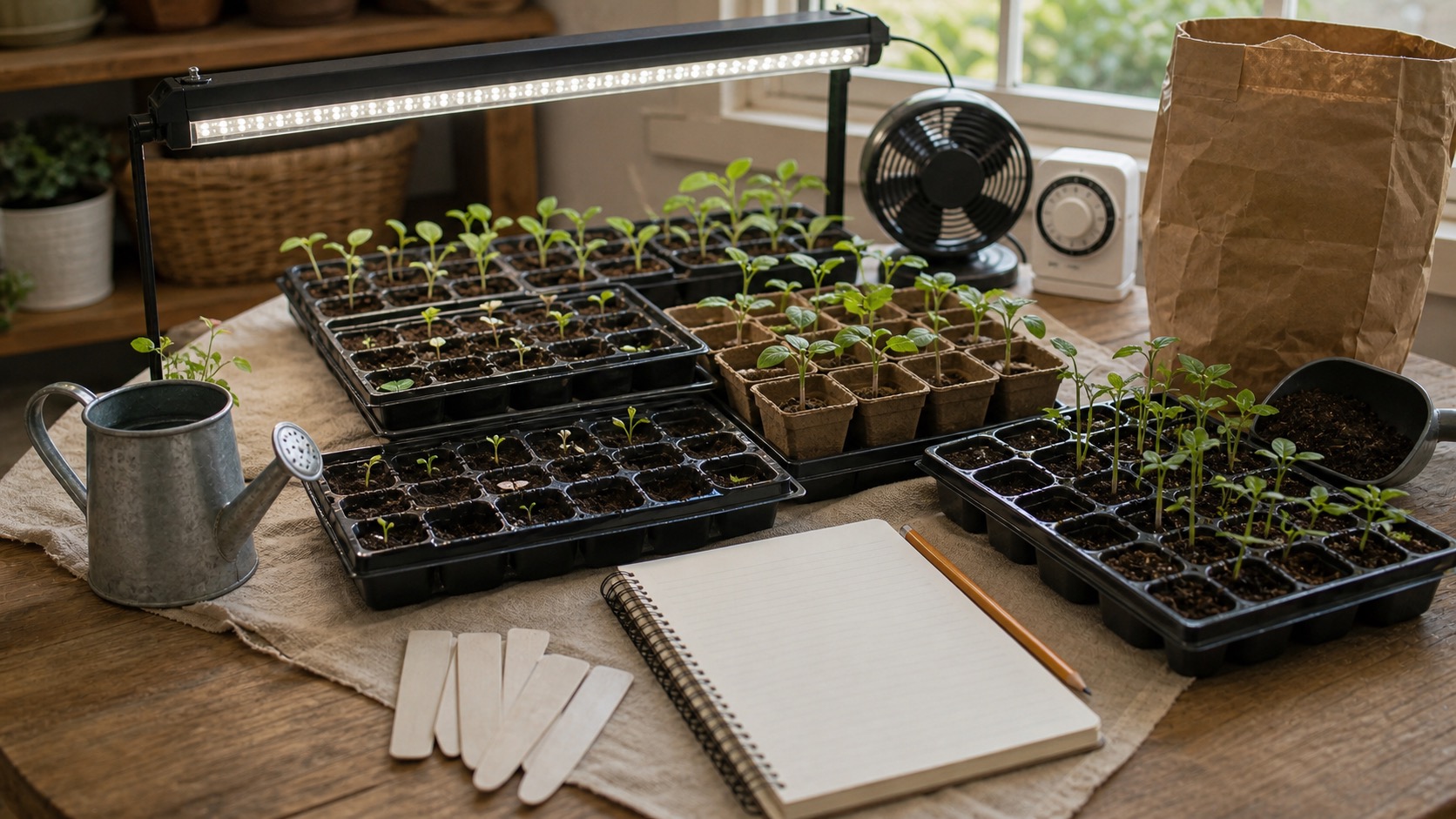
The seed-starting mistakes that waste the most money are starting too early, starting too much, giving seedlings weak light, using containers without drainage, losing labels, overwatering, and skipping hardening off before transplanting. Most failures come from small mismatches stacking together.
Seed starting feels inexpensive until the tray sits under weak light for six weeks, the seedlings stretch, the labels vanish, and the plants are too stressed to transplant well. The fix is not always more equipment. Often it is better timing and fewer crops.
I like the idea of starting every promising packet indoors, but that is exactly where a beginner setup gets expensive. Seed starting is not only sowing seeds. It is weeks of light, moisture, labels, timing, potting up, and transition time before the plants ever earn a place in the garden.
The real decision underneath this topic
The real decision is not whether seed starting is worth it. It often is. The real decision is which crops and how many trays deserve indoor space before you have proven the light, timing, and care rhythm.
A stronger first move is to name the constraint before choosing the solution. Is the bottleneck cash, time, space, safety, storage, weather, family capacity, or lack of skill? Each answer points to a different next step.
A realistic beginner scenario
Imagine the week is already full: work or job search, meals, laundry, school or family needs, weather changes, and one tray of seedlings that needs checking before the day runs away. That is the week this advice has to survive.
If the plan only works when the calendar is open and everyone has energy, it is too fragile. The useful version is smaller, more visible, and easier to repeat. A single sturdy tray teaches more than a shelf full of leggy seedlings you secretly dread watering.
What I would do first
The important part is not making the first version impressive. The important part is closing the loop. A seed-starting loop is not closed when the seeds germinate. It is closed when a healthy plant survives hardening off, gets transplanted, and teaches you whether starting that crop indoors was worth the trouble.
What can probably wait
Most beginners can delay starting every packet indoors, large heat mats before you know what needs warmth, rare seeds before you can grow basics well, and more trays than you have light for. Delaying these does not mean giving up on them. It means refusing to spend future energy before the present system has proven it can hold.
Waiting is especially useful when a purchase or project depends on assumptions you have not tested yet. A month of observation can prevent a year of working around the wrong setup.
How to tell if the plan is working
A good beginner plan leaves evidence. You should be able to see whether the work got easier, whether money stopped leaking, whether the household felt calmer, and whether the next decision became clearer.
The clearest signal is repetition. If the routine, tool, crop, budget, or setup still makes sense during a busy week, it probably belongs. If it only works when you are unusually motivated, it needs to be smaller or better placed.
The useful next step
Seed starting gets easier when you stop treating it like a shopping project and start treating it like a timing project.
If you want to turn this into action, write the smallest version on paper today: the crops worth starting indoors, the local transplant window, the number of cells you can light well, and the exact spot where watering will happen. That simple boundary is often what separates seed starting from seed collecting.
I am including a few affiliate links because some tools genuinely prevent wasted trays. They are optional. If you already have a light, trays that drain, and labels that survive watering, use what you have before buying anything else.
Recommendations
Small seed-starting tools that can earn their place
Light first
Adjustable seed-starting grow light
Useful if seedlings stretch toward a window. Start with one simple adjustable light before building a big indoor station.
Check current priceSmall setup
Seed-starting trays with drainage
Plain trays with drainage and a bottom tray make moisture easier to manage. Skip giant kits until one small tray works.
Check current priceCheap safeguard
Waterproof plant labels
Cheap labels save weeks of guessing when varieties look the same. Use scrap labels first if they hold up to watering.
Check current priceThe maintenance test
A garden plan should be judged less by planting-day enthusiasm and more by maintenance reality. The test is simple: can you water it, weed it, reach it, harvest it, and notice problems during the busiest normal week of the season? If not, the garden is not too humble. It is too big, too far away, or too dependent on ideal conditions.
This is why a small first garden can be a stronger teacher than a big one. Small gardens make cause and effect easier to see. You notice which bed dries first, which crop gets ignored, which harvest actually reaches the kitchen, and which job you avoid. That information is worth more than another row planted from optimism.
A final first-season reality check
Before the plan goes into the ground, ask what this garden will need in the least convenient month, not the most exciting one. Planting day is usually easy. The test comes when weeds, heat, pests, travel, work, and family life arrive at the same time. A beginner garden that stays small enough to observe and maintain will teach more than a large planting that turns into a guilt project by midsummer.
Best Next Step
Turn this into one calmer next move.
The first-step checklist helps you narrow this idea into one useful next action instead of ten parallel projects.
See the garden basicsRecommended next reads
Read the next guide that supports this decision
These are the next pieces most likely to help the bigger picture make more sense without sending you in ten directions at once.
Gardening
How to Plan Your First Homestead Garden Without Doing Too Much
A successful first garden is smaller, clearer, and less romantic than many beginners expect. That is a good thing.
Gardening
What to Plant First in a Beginner Homestead Garden
A practical crop-selection guide for first gardens: what to plant first, what to skip for now, and how to choose crops that teach useful skills without overwhelming the week.
Budgeting
How Much Does a Small Beginner Garden Really Cost?
A practical starter-budget breakdown for a small beginner garden, including where the money really goes and what can wait.
Frequently asked questions
What is the biggest seed-starting mistake beginners make?
Starting too many seeds too early is usually the costliest mistake. The trays need light, space, labels, watering, potting up, and hardening off for weeks before they ever reach the garden.
Do beginners need grow lights to start seeds?
Not for every situation, but many indoor seedlings get leggy under weak window light. If you start seeds indoors regularly, a simple adjustable light can matter more than fancy trays.
What seed-starting gear can wait?
Large heat mats, rare seeds, extra trays, decorative labels, and complicated shelving can wait until one small tray has made it from sowing to transplanting successfully.
Recommendations
Useful tools and resources for this decision
These are included only where they reduce repeated friction, clarify a next step, or help you avoid buying the wrong thing first.
Light first
Adjustable seed-starting grow light
Useful if your seedlings get tall and weak under window light. Start with one simple light before building a large indoor seed station.
Best for: Beginners starting tomatoes, peppers, herbs, or greens indoors with weak natural light
Check current priceSmall setup
Seed-starting trays with drainage
Choose plain trays with drainage and a bottom tray. Skip oversized kits until you know how many seedlings you can actually care for.
Best for: A small first setup that needs watering to be controlled instead of chaotic
Check current priceCheap safeguard
Waterproof plant labels
A cheap label prevents weeks of guessing. Use masking tape or scrap labels first if they survive your watering routine.
Best for: Anyone starting more than one crop or more than one variety
Check current priceRecommended next reads
Read next if it helps the decision
Move into the next guide only if it clarifies the next practical step.
Gardening
How to Plan Your First Homestead Garden Without Doing Too Much
A successful first garden is smaller, clearer, and less romantic than many beginners expect. That is a good thing.
Gardening
What to Plant First in a Beginner Homestead Garden
A practical crop-selection guide for first gardens: what to plant first, what to skip for now, and how to choose crops that teach useful skills without overwhelming the week.
Budgeting
How Much Does a Small Beginner Garden Really Cost?
A practical starter-budget breakdown for a small beginner garden, including where the money really goes and what can wait.
Garden gear support
Get the buy-first guide before the first garden collects too much gear.
Use the guide to decide which early garden purchases earn money now, which ones can be borrowed, and which ones can wait until the routine proves itself.
Best for: Beginners who keep seeing useful things online and need a disciplined way to decide what actually earns a place.
- A buy now, borrow, wait, or skip framework
- Starter category shortlists
- A three-question purchase test
Garden planning notes, restrained gear decisions, and the guide first.
After signup, the download will unlock right here so you can save or print it.
About the author
William Mock
Founder, writer, and beginner homesteader
William writes from the beginner side of rebuilding after a layoff: homestead plans, family systems, budgets, tools, and the decisions that make a home feel less fragile.
Read why this site existsRelated Guides
Keep building context
Gardening
How to Plan Your First Homestead Garden Without Doing Too Much
A successful first garden is smaller, clearer, and less romantic than many beginners expect. That is a good thing.
Gardening
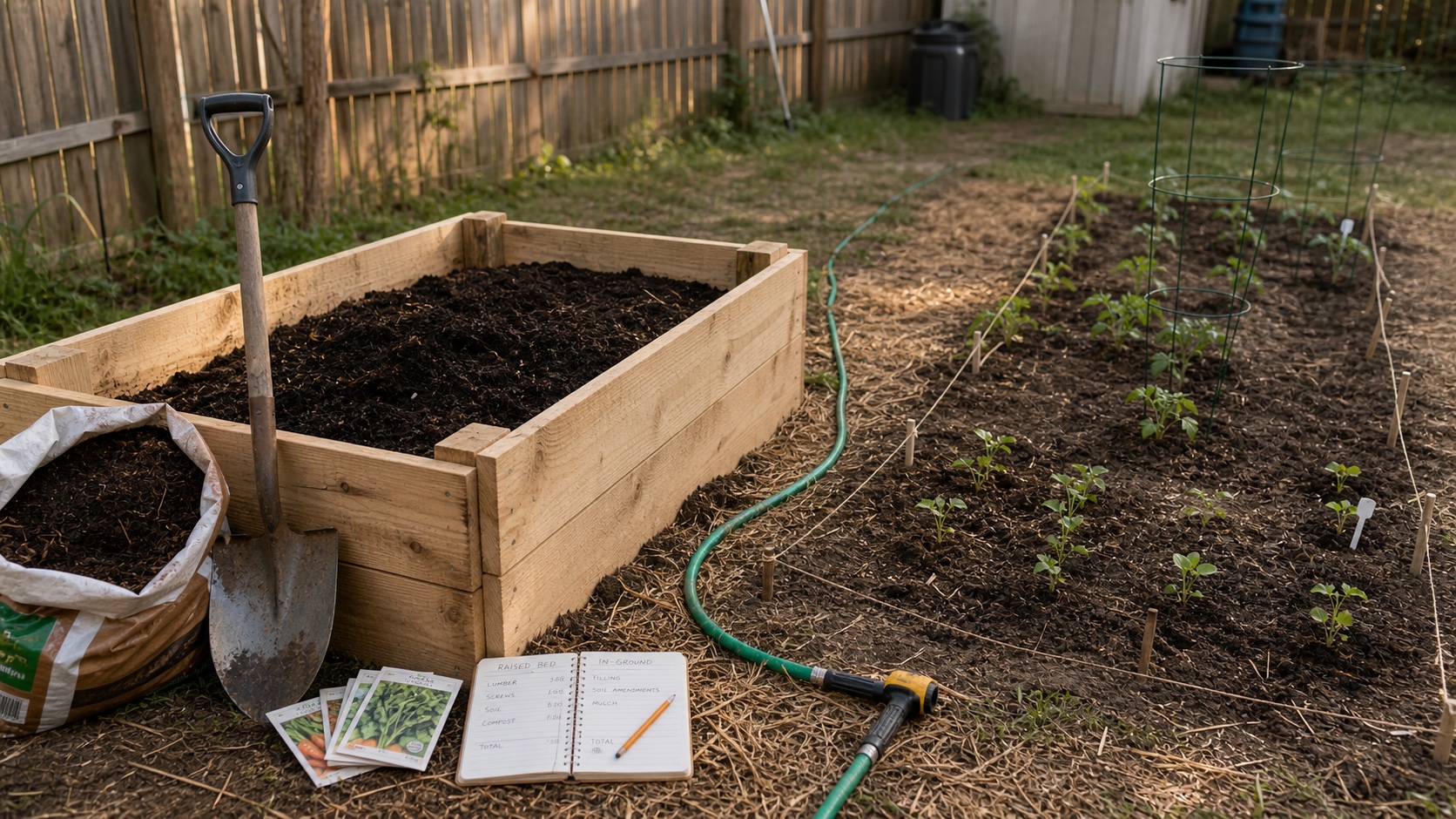
Raised Beds vs In-Ground Gardening for Beginners
A practical comparison of raised beds and in-ground gardening for beginners who care about budget, effort, and staying consistent.
Budgeting
How Much Does a Small Beginner Garden Really Cost?
A practical starter-budget breakdown for a small beginner garden, including where the money really goes and what can wait.