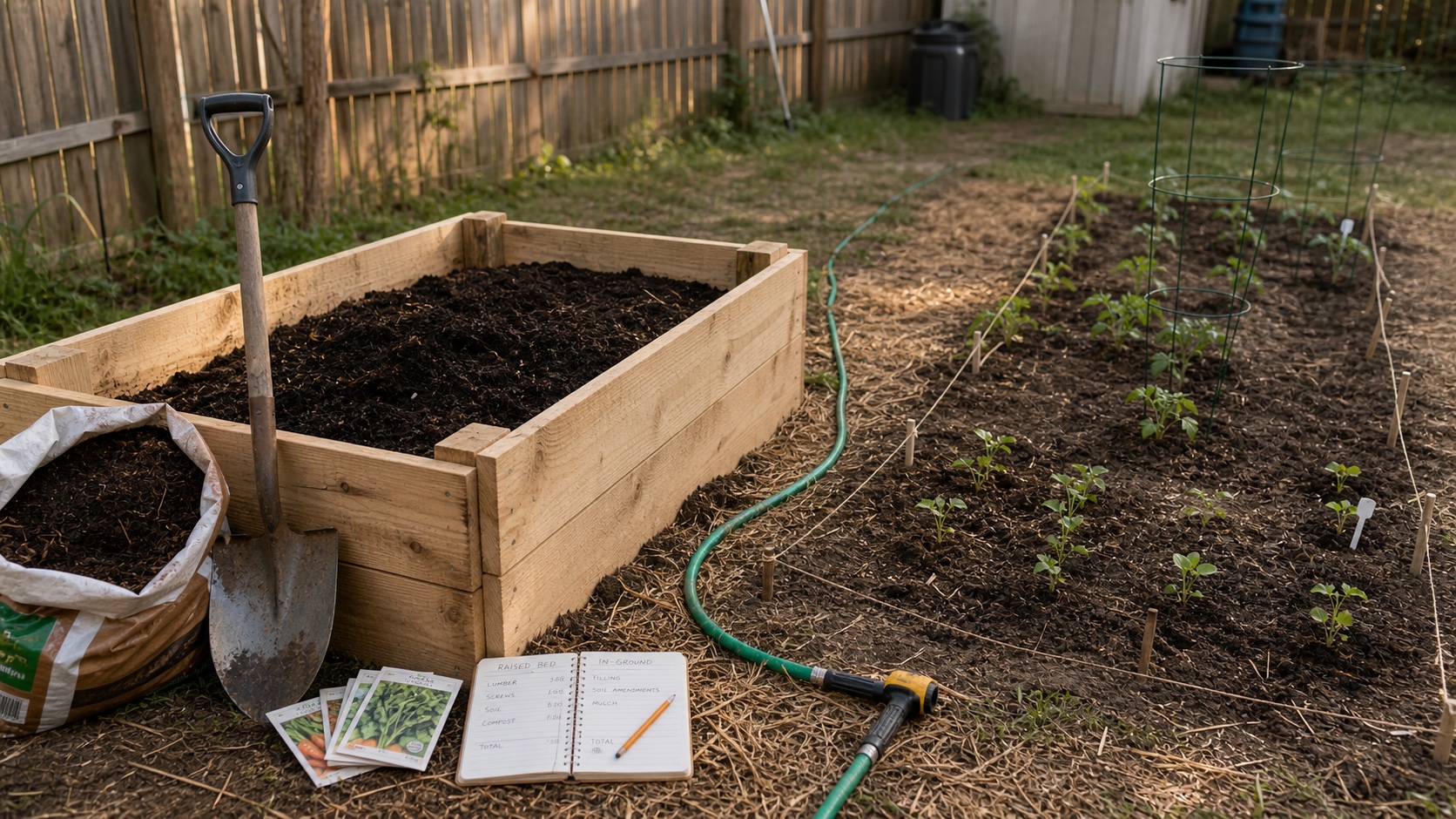
Use raised beds when your soil is compacted, contaminated, poorly drained, or hard to access. Use in-ground beds when your soil is workable, your budget is tight, and you need room to learn without buying a whole garden before you understand the first one.
Raised beds look tidy and beginner-friendly, which is why they dominate garden photos. But they also require lumber or containers, soil volume, compost, paths, and watering. In-ground beds look less polished, but they can be cheaper and easier to expand if the native soil is decent. I do not want a beginner to spend the garden budget on the part that photographs well and then run out of money for soil, mulch, or a hose that reaches.
Garden advice has to bend around local season, soil, water, sun, pest pressure, and the amount of attention the gardener can actually give during a busy week. That is where the honest answer starts.
The real decision underneath this topic
The real decision is not whether raised beds are better than in-ground beds. The decision is where your first garden dollars and first garden energy will teach you the most without making the season heavier than it needs to be.
A stronger first move is to name the constraint before choosing the setup. Is the bottleneck soil safety, drainage, weeds, water access, bending and reach, budget, sun, or family capacity? Each answer points to a different first bed.
A realistic beginner scenario
Picture a normal Saturday, not the ideal garden day in your head. There is laundry inside, dinner still has to happen, the weather is warming up, and you have a few hours to make progress before the week closes in again. You can either build one raised bed and fill it correctly, or mark one small in-ground bed, add compost, mulch it, and make sure the hose reaches.
Neither choice is automatically humble or fancy. The useful version is the one you can maintain after the first rush wears off. That is the part I keep coming back to with beginner homesteading: the best system is usually the one that still works when life is ordinary.
What I would do first
The first bed does not need to impress anyone. It needs to finish the season with useful evidence: what dried out, what grew, what got ignored, what reached the kitchen, and what you would change before adding more square footage.
What can probably wait
Most beginners can delay building a whole garden of boxes before testing one bed, expensive metal beds when the budget is already tight, permanent layouts before you understand sun and drainage, and decorative paths before soil improvement. Delaying these does not mean giving up on a good garden. It means letting the first season tell you what the next dollar should actually fix.
Waiting is especially useful when a purchase depends on assumptions you have not tested yet. A month of watching where water sits, where the sun lands, and which spot you naturally walk past can prevent a year of working around the wrong setup.
How to tell if the plan is working
A good beginner garden leaves evidence. You should be able to see whether the bed stayed watered, whether weeds stayed manageable, whether the soil improved, whether harvest reached the kitchen, and whether the next decision became clearer.
The clearest signal is repetition. If the bed still makes sense during a busy week, it probably belongs. If it only works when you are unusually motivated, it needs to be smaller, closer to water, or easier to reach.
The useful next step
The right answer is not raised bed or in-ground. It is the setup you can afford, water, weed, and improve for more than one season.
If you want to turn this into action, write the smallest version on paper today: the cost ceiling, the time window, the materials already on hand, the water source, and the first moment in the week when the work will happen. That simple written boundary is often what separates a real homestead step from another idea floating around in your head. I am not adding product links here until a specific item earns the recommendation; a weak affiliate link would make the advice less trustworthy, not more useful.
The maintenance test
A garden plan should be judged less by planting-day enthusiasm and more by maintenance reality. The test is simple: can you water it, weed it, reach it, harvest it, and notice problems during the busiest normal week of the season? If not, the garden is not too humble. It is too big, too far away, or too dependent on ideal conditions.
This is why a small first garden can be a stronger teacher than a big one. Small gardens make cause and effect easier to see. You notice which bed dries first, which crop gets ignored, which harvest actually reaches the kitchen, and which job you avoid. That information is worth more than another row planted from optimism.
A final first-season reality check
Before the plan goes into the ground, ask what this garden will need in the least convenient month, not the most exciting one. Planting day is usually easy. The test comes when weeds, heat, pests, travel, work, and family life arrive at the same time. A beginner garden that stays small enough to observe and maintain will teach more than a large planting that turns into a guilt project by midsummer.
Best Next Step
Turn this into one calmer next move.
The first-step checklist helps you narrow this idea into one useful next action instead of ten parallel projects.
See the garden planning toolsRecommended next reads
Read the next guide that supports this decision
These are the next pieces most likely to help the bigger picture make more sense without sending you in ten directions at once.
Gardening
How to Plan Your First Homestead Garden Without Doing Too Much
A successful first garden is smaller, clearer, and less romantic than many beginners expect. That is a good thing.
Budgeting
How Much Does a Small Beginner Garden Really Cost?
A practical starter-budget breakdown for a small beginner garden, including where the money really goes and what can wait.
Gardening
What to Plant First in a Beginner Homestead Garden
A practical crop-selection guide for first gardens: what to plant first, what to skip for now, and how to choose crops that teach useful skills without overwhelming the week.
Frequently asked questions
What should beginners decide first?
Decide whether your biggest constraint is soil quality, budget, water access, or maintenance. The best first garden is the one you can water, weed, reach, and observe on ordinary weeks.
What mistake do beginners make most often here?
Many beginners price the frame or the seed packet but forget the whole system: soil or compost, mulch, paths, water access, tools, and the time to keep the bed alive after planting day.
What should probably wait?
A full garden layout, expensive bed materials, decorative paths, and extra varieties can usually wait until one small bed has made it through a real season.
Recommendations
Useful tools and resources for this decision
These are included only where they reduce repeated friction, clarify a next step, or help you avoid buying the wrong thing first.
Worth the money
Pruning shears
A sharp, comfortable pair of shears for repeated little trimming, harvesting, and cleanup jobs.
Check current priceBeginner-friendly
Seed starting tray set
A simple tray setup for learning seed starting without turning the first attempt into a full indoor nursery.
Check current priceCompost thermometer
A practical tool for understanding what your compost pile is actually doing.
Useful once composting becomes a regular part of your system.
Check current priceRecommended next reads
Read next if it helps the decision
Move into the next guide only if it clarifies the next practical step.
Gardening
How to Plan Your First Homestead Garden Without Doing Too Much
A successful first garden is smaller, clearer, and less romantic than many beginners expect. That is a good thing.
Budgeting
How Much Does a Small Beginner Garden Really Cost?
A practical starter-budget breakdown for a small beginner garden, including where the money really goes and what can wait.
Gardening
What to Plant First in a Beginner Homestead Garden
A practical crop-selection guide for first gardens: what to plant first, what to skip for now, and how to choose crops that teach useful skills without overwhelming the week.
Garden gear support
Get the buy-first guide before the first garden collects too much gear.
Use the guide to decide which early garden purchases earn money now, which ones can be borrowed, and which ones can wait until the routine proves itself.
Best for: Beginners who keep seeing useful things online and need a disciplined way to decide what actually earns a place.
- A buy now, borrow, wait, or skip framework
- Starter category shortlists
- A three-question purchase test
Garden planning notes, restrained gear decisions, and the guide first.
After signup, the download will unlock right here so you can save or print it.
About the author
William Mock
Founder, writer, and beginner homesteader
William writes from the beginner side of rebuilding after a layoff: homestead plans, family systems, budgets, tools, and the decisions that make a home feel less fragile.
Read why this site existsRelated Guides
Keep building context
Gardening
How to Plan Your First Homestead Garden Without Doing Too Much
A successful first garden is smaller, clearer, and less romantic than many beginners expect. That is a good thing.
Budgeting
How Much Does a Small Beginner Garden Really Cost?
A practical starter-budget breakdown for a small beginner garden, including where the money really goes and what can wait.
Budgeting
Homesteading on a Budget: What to Buy First and What Can Wait
If money is tight, the smartest homestead purchases are the ones that reduce friction quickly and keep you from rebuying the same lesson twice.