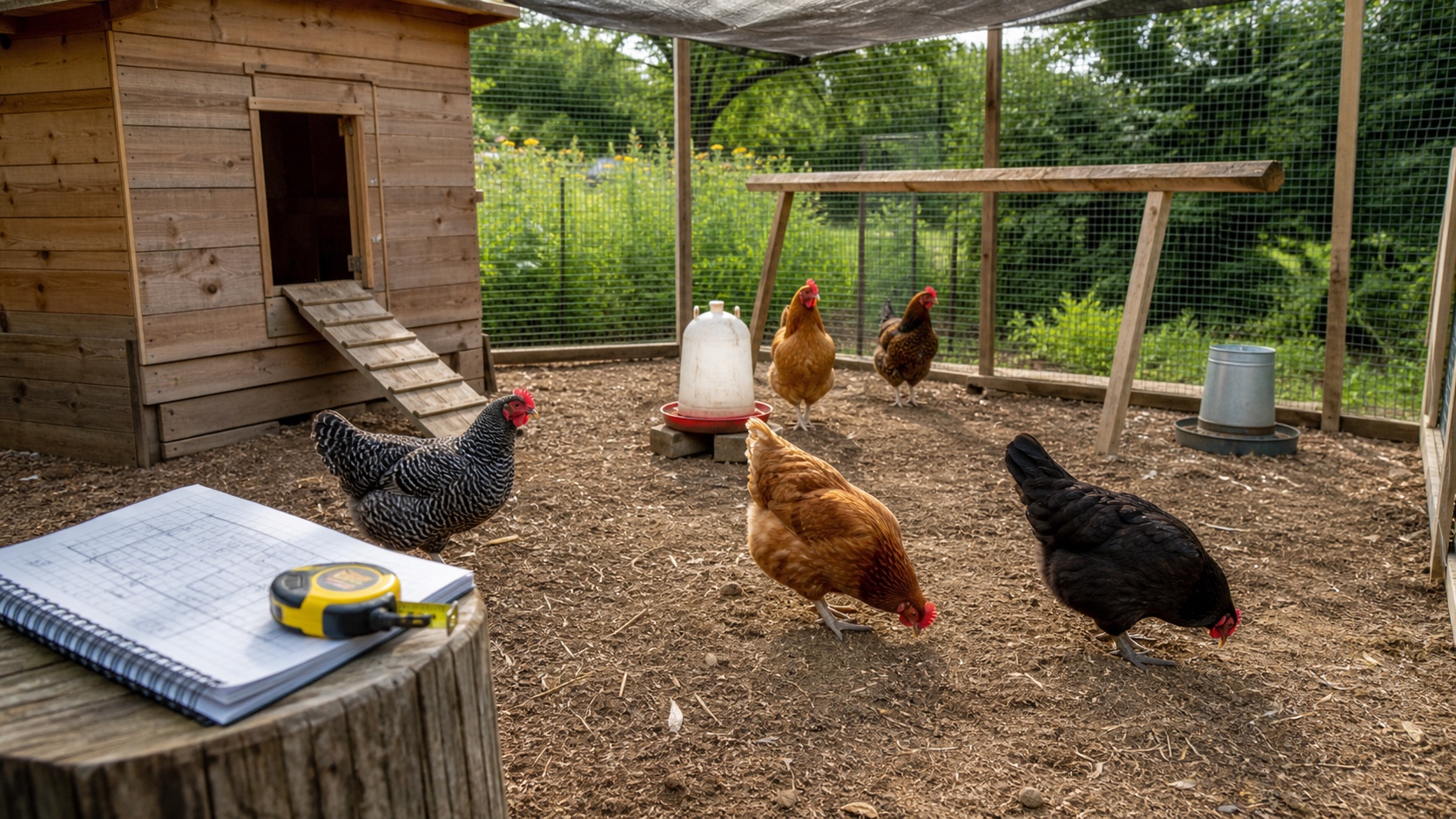
Plan the space before you choose the number of birds. A practical beginner range is about 3 to 5 square feet of indoor coop space per standard hen when birds have reliable outdoor access, plus a roomy secure run that lets birds move away from each other, feed, water, weather, and mess.
Chicken math usually starts with the chicks. It should start with the space. I know the small-flock dream is more fun than measuring corners and gates, but the coop, run, shade, ventilation, predator protection, feed storage, and cleaning access decide how many birds are realistic long before egg dreams do.
Because chickens are living animals, the setup has to be judged by daily care first: warmth, water, feed, space, sanitation, predator protection, and the keeper’s ability to notice problems early. A crowded setup does not just make chores annoying. It gives every small mistake less room to be corrected.
The real decision underneath this topic
The real decision is not the smallest legal or technical space a chicken can occupy. The real decision is how much coop and run space a beginner should plan before choosing flock size, so daily care stays clean, observable, and humane.
A stronger first move is to name the constraint before choosing the solution. Is the bottleneck yard size, local rules, predator pressure, drainage, winter weather, cleaning access, family capacity, or budget? Each answer changes the flock size more than breed preference does.
A realistic beginner scenario
Imagine a wet week when the run is muddy, the feed needs refilling, the waterer gets dirty twice, and the person who was most excited about chickens has a long workday. That is the week this advice has to survive.
If the plan only works when the weather is kind and everyone has energy, it is too fragile. The useful version is smaller, cleaner, more visible, and easier to repeat.
What I would do first
The important part is not making the first version impressive. The important part is closing the loop. A closed loop teaches you what the next version should be. An open loop mostly creates guilt, clutter, and another decision to carry.
My bias here is simple: I would rather start with fewer birds and more margin than spend the first season apologizing to a crowded setup. Extra space gives you room to learn. A flock that barely fits gives you less room to be new.
What can probably wait
Most beginners can delay maxing out legal flock limits, adding birds before the run is built, tiny coops sold for more birds than they comfortably hold, and assuming free-ranging will solve every space problem. Delaying these does not mean giving up on them. It means refusing to spend future energy before the present system has proven it can hold.
Waiting is especially useful when a purchase or project depends on assumptions you have not tested yet. A month of observation can prevent a year of working around the wrong setup.
How to tell if the plan is working
A good beginner plan leaves evidence. You should be able to see whether the work got easier, whether money stopped leaking, whether the household felt calmer, and whether the next decision became clearer.
The clearest signal is repetition. If the routine, tool, crop, budget, or setup still makes sense during a busy week, it probably belongs. If it only works when you are unusually motivated, it needs to be smaller or better placed.
The useful next step
If you are unsure, keep fewer birds and build more margin. Space problems are harder to solve after the flock is already home.
If you want to turn this into action, sketch the smallest version on paper today: the coop footprint, run footprint, feed and water location, cleanout path, shade, drainage, and where predators are most likely to test the setup. This article includes a few affiliate links because measuring, securing, and placing resources are practical parts of the decision. They are optional, and none of them are a reason to crowd more birds into the plan.
Recommendations
Useful tools before you choose flock size
Plan first
25-foot tape measure
Measure the real coop and run footprint, gates, setbacks, and cleanout access before you choose a flock size.
Check current pricePredator barrier
Hardware cloth
Useful for predator-resistant run edges, ventilation openings, aprons, and vulnerable gaps once the layout is clear.
Check current priceLayout support
Hanging feeder and waterer
Buy after the layout is measured. Feed and water placement affects usable space, cleaning, and flock movement.
Check current priceThe safety and care filter
Chicken decisions deserve a stricter filter than ordinary household projects because the animals pay for unclear plans. Before a beginner adds birds, buys equipment, or changes a setup, the question should be: does this make daily care safer, cleaner, easier to observe, or more reliable? If the answer is only that it looks convenient or exciting, it probably belongs later.
A useful flock decision also needs a bad-weather version. How does the setup work when it rains for three days, when the hose freezes, when a child leaves a gate open, when feed runs low, or when you are tired after work? Beginners do not need fear-based planning, but they do need to assume normal life will interrupt the ideal routine.
A final flock-size reality check
Before this advice becomes a purchase, run it through one more ordinary-day test: who handles this chore when the weather is bad, the week is crowded, or the original excited person is unavailable? Chicken keeping is daily work, and daily work needs redundancy. The best beginner plan leaves enough money, space, and patience for the unplanned parts: spilled feed, wet bedding, late chores, a sick bird, a predator scare, or equipment that does not work the way the product page implied.
Best Next Step
Use the chicken checklist before you buy more flock gear.
The chicken checklist turns broad advice into an actual setup plan, recurring-cost view, and first-year rhythm.
See the chicken setup basicsRecommended next reads
Read the next guide that supports this decision
These are the next pieces most likely to help the bigger picture make more sense without sending you in ten directions at once.
Chickens
The Real Cost of Getting Started With Backyard Chickens
Backyard chickens can be a strong first step into homesteading, but the startup costs and recurring work deserve an honest look.
Chickens
Building a Chicken Tractor With Limited Carpentry Skills
Chicken tractors look simple from a distance. In practice, the details that matter most are movement, weather, and whether the build actually fits your skill level.
Chickens
How Many Chickens Should a Beginner Start With?
A practical, beginner-first guide to choosing a first flock size without overcommitting on coop space, feed, chores, or your actual week.
Frequently asked questions
How much coop space do backyard chickens need?
A practical planning range is about 3 to 5 square feet of indoor coop space per standard hen when birds also have reliable outdoor access. More room is usually easier to manage than a bare minimum.
How much run space should I plan?
Plan the largest secure run your yard and budget can reasonably hold. Common beginner guidance often lands around 8 to 10 square feet per bird outdoors, but shade, drainage, feed placement, and predator protection matter too.
Should I trust the bird count printed on a small prefab coop?
Not without measuring. Subtract unusable corners, nest boxes, feeders, waterers, and awkward cleanout space, then choose a flock size that leaves margin.
Recommendations
Useful tools and resources for this decision
These are included only where they reduce repeated friction, clarify a next step, or help you avoid buying the wrong thing first.
Plan first
25-foot tape measure
Use this before buying birds or a coop. Measure the actual footprint, run path, gates, cleanout access, shade, and setbacks instead of trusting product photos.
Best for: Planning coop and run space before committing to flock size
Check current pricePredator barrier
Hardware cloth
A secure run matters as much as square footage. Hardware cloth is often part of predator-resistant openings, aprons, and vulnerable gaps.
Best for: Run edges, ventilation openings, and predator-prone gaps
Check current priceLayout support
Hanging feeder and waterer
Only buy after the layout is clear. A feeder and waterer take up usable space, so planning their location helps prevent crowding around resources.
Best for: Small flocks where floor space and clean access need to stay visible
Check current priceRecommended next reads
Read next if it helps the decision
Move into the next guide only if it clarifies the next practical step.
Chickens
The Real Cost of Getting Started With Backyard Chickens
Backyard chickens can be a strong first step into homesteading, but the startup costs and recurring work deserve an honest look.
Chickens
Building a Chicken Tractor With Limited Carpentry Skills
Chicken tractors look simple from a distance. In practice, the details that matter most are movement, weather, and whether the build actually fits your skill level.
Chickens
How Many Chickens Should a Beginner Start With?
A practical, beginner-first guide to choosing a first flock size without overcommitting on coop space, feed, chores, or your actual week.
Chicken setup support
Get the chicken setup checklist before you buy more flock gear.
Use the first-year checklist to price the flock honestly, cover the starter essentials, and delay the upgrades that can wait.
Best for: Readers trying to price a first flock honestly and avoid a scattered chicken setup.
- A pre-chick setup checklist
- A recurring-cost planning section
- A simple weekly flock-care rhythm
Chicken setup notes, beginner flock lessons, and the checklist first.
After signup, the download will unlock right here so you can save or print it.
About the author
William Mock
Founder, writer, and beginner homesteader
William writes from the beginner side of rebuilding after a layoff: homestead plans, family systems, budgets, tools, and the decisions that make a home feel less fragile.
Read why this site existsRelated Guides
Keep building context
Chickens
The Real Cost of Getting Started With Backyard Chickens
Backyard chickens can be a strong first step into homesteading, but the startup costs and recurring work deserve an honest look.
Chickens
How Many Chickens Should a Beginner Start With?
A practical, beginner-first guide to choosing a first flock size without overcommitting on coop space, feed, chores, or your actual week.
Chickens
Building a Chicken Tractor With Limited Carpentry Skills
Chicken tractors look simple from a distance. In practice, the details that matter most are movement, weather, and whether the build actually fits your skill level.