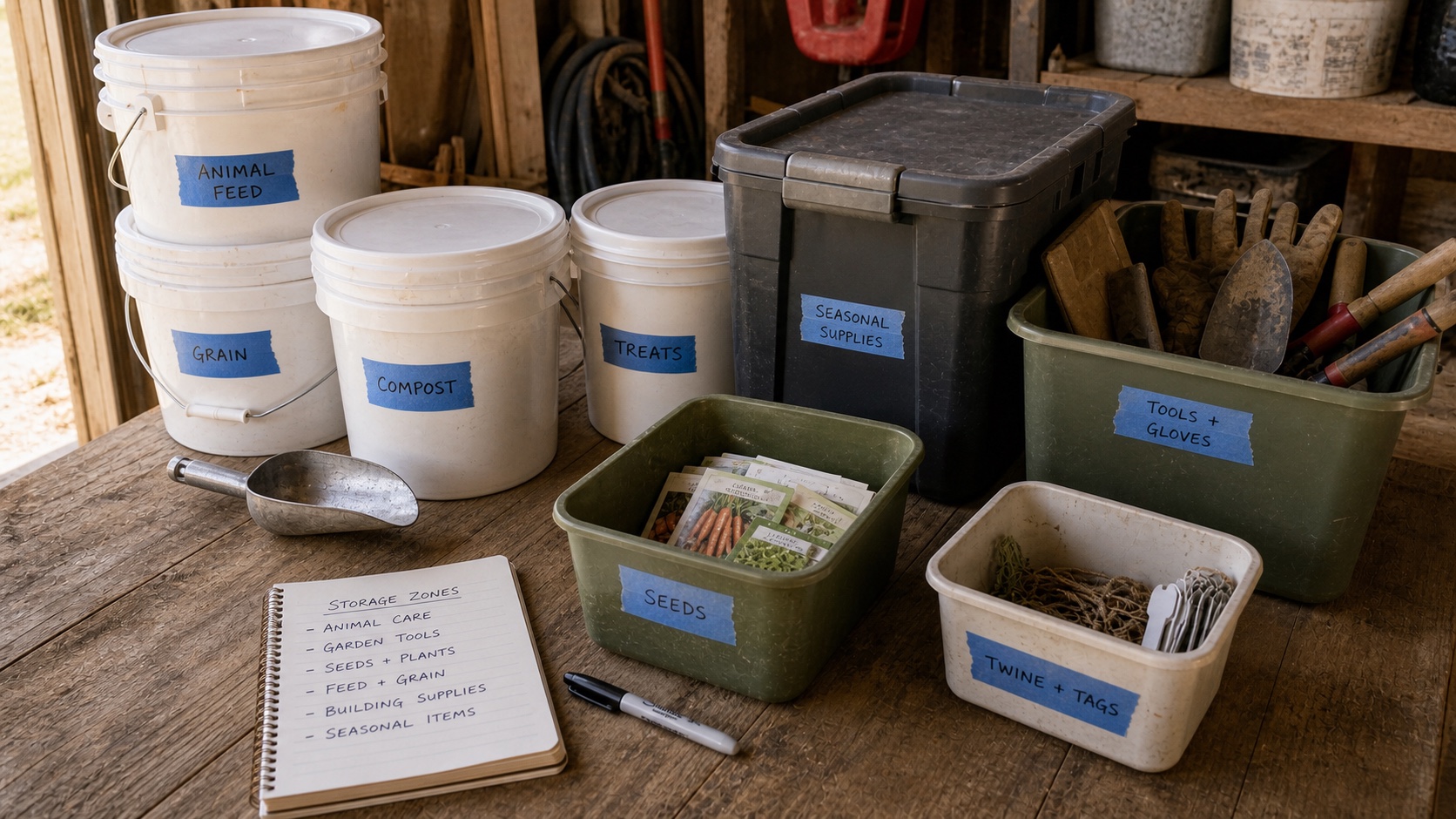
Choose containers by job: food-safe buckets for edible or food-adjacent storage, rugged lidded totes for dry seasonal supplies, open bins for daily-use tools, and clearly labeled sealed storage for feed, seed, gloves, twine, tags, and spare parts. Do not buy containers until you know what keeps getting lost, wet, spilled, or carried twice.
Storage looks boring until the feed gets damp, the seed packets disappear, the gloves are in three places, and every project starts with a search. Good containers are less about organizing aesthetics and more about keeping work from scattering.
This is one of those places where I have to talk myself out of buying the neat-looking setup first. A homestead does not need a perfect wall of matching bins. It needs the feed dry, the tools findable, the seed packets together, and the daily mess easier to reset.
The real decision underneath this topic
The real decision is which containers actually help a working homestead instead of creating more plastic clutter. Buckets, totes, and bins are cheap enough to buy casually, which is exactly why they can pile up without solving anything.
A stronger first move is to name the constraint before choosing the container. Is the problem moisture, pests, heavy lifting, seed organization, daily carry, muddy gear, seasonal overflow, or tools that never return to the same place? Each problem asks for a different kind of storage.
A realistic beginner scenario
Picture a normal week, not a clean-slate organizing day. There is a half-used bag of feed, seed packets from three different projects, work gloves by the door, twine on a shelf, a muddy trowel, and one tote of seasonal supplies that gets opened twice a year.
The useful storage version is not complicated. It is smaller, more visible, and easier to repeat: one clean bucket for what must stay clean, one sealed tote for what must stay dry, and one open bin for what needs to be grabbed without thinking.
What I would do first
The first storage pass does not need to impress anyone. It needs to answer a practical question: did this container stop the repeated search, spill, damage, or extra trip? If not, it is not organization. It is just another object to manage.
What can probably wait
Most beginners can delay matching bins before zones are defined, giant totes too heavy to move, cheap lids for outdoor storage, and food storage in containers that are not rated for food contact. Delaying these does not mean giving up on good storage. It means letting the first messy month tell you what actually needs a container.
Waiting is especially useful with storage because the first answer is often wrong. You may think you need a big tote, then learn that two smaller bins are safer to lift. You may think everything needs a lid, then realize daily-use gloves disappear when they are hidden.
How to tell if the plan is working
A good storage setup leaves evidence. You should be able to see whether feed stayed dry, seed packets stayed together, tools returned home, wet gear had somewhere to land, and the next purchase became clearer.
The clearest signal is repetition. If the bucket, tote, or bin still makes sense during a busy week, it probably belongs. If it only works after a full cleanup day, it needs to be smaller, closer to the work, or easier to see.
The useful next step
A container earns its keep when it prevents a repeated loss of time, money, or materials.
If you want to turn this into action, write the smallest version on paper today: the one storage zone you are fixing, what keeps going wrong there, the container type that fits the job, and the place it will live. This article does include a few affiliate links because containers are the decision here. I am keeping them narrow on purpose: useful categories, easy to skip, and not a reason to buy more than the work has earned.
The storage and maintenance test
Tools should be filtered through storage and maintenance before brand preference. Where will it live? Who will clean it? Can it rust, dull, crack, leak, or become unsafe? Does it need fuel, batteries, sharpening, replacement parts, or dry storage? If the answer creates another hidden chore, the tool may still be worth buying, but it is not free after checkout.
The strongest beginner tool purchases usually have three traits: they solve a repeated job, they are simple enough to inspect, and they can be put away in the same place every time. That sounds plain because it is. Plain tools doing repeated work are how a homestead starts feeling functional.
Recommendations
Three container purchases worth considering first
Food-safe pick
Food-safe 5-gallon buckets with lids
Best for clean, food-adjacent storage. Skip these for dirty tools and use plain utility buckets there.
Check current priceSeasonal storage
Heavy-duty lidded storage totes
Useful for seasonal gear and dry supplies, as long as the tote stays light enough for the person who moves it.
Check current priceDaily-use bin
Open utility bins
Good for daily-use gloves, hand tools, twine, tags, and supplies that need visibility more than a lid.
Check current priceBest Next Step
Use the buy-first guide before you add more gear.
The buy-first guide helps you separate truly useful purchases from the gear that only looks useful online.
Browse the useful first toolsRecommended next reads
Read the next guide that supports this decision
These are the next pieces most likely to help the bigger picture make more sense without sending you in ten directions at once.
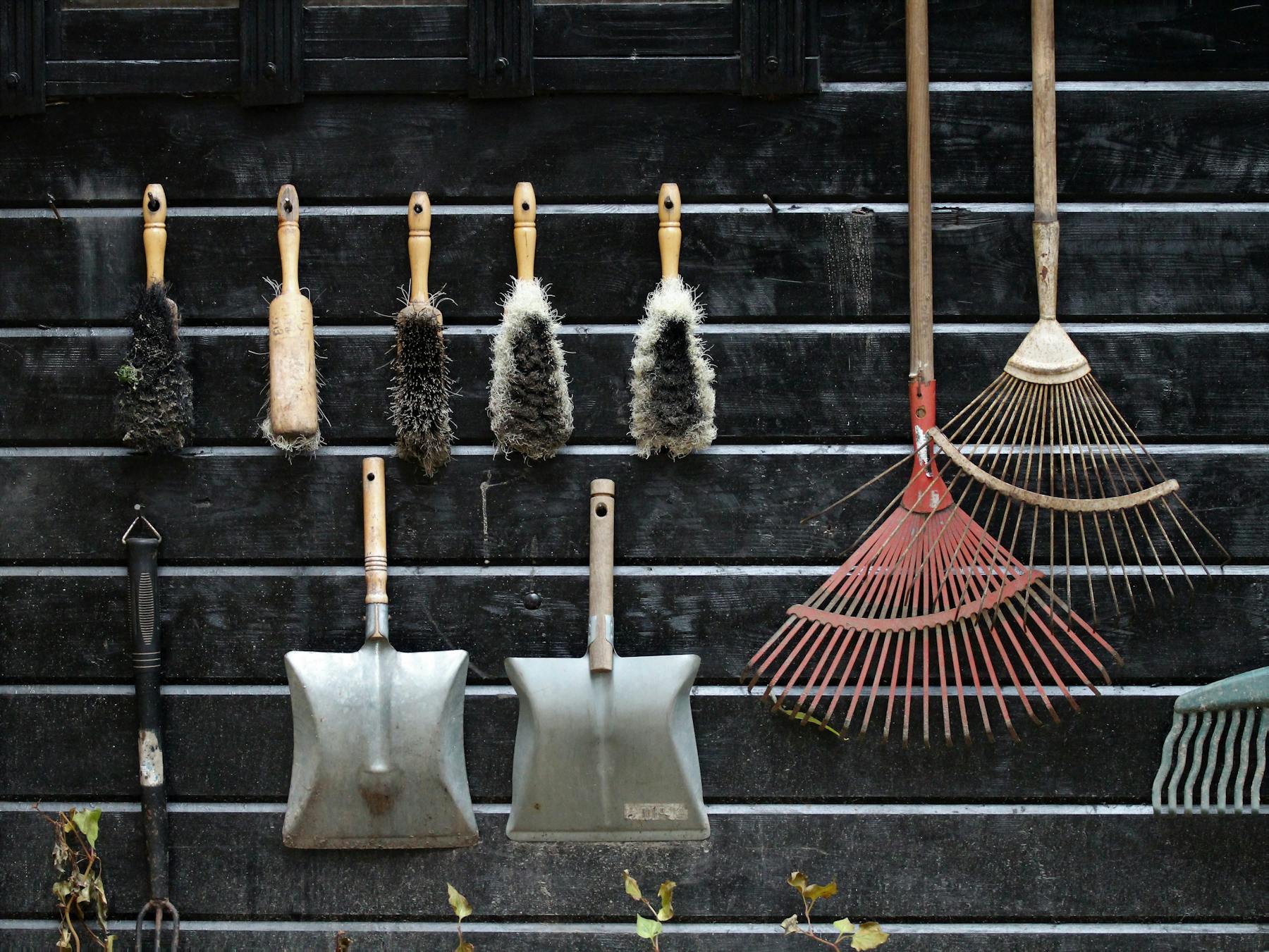
Tools
Tools I Actually Use on Our Homestead
A small list of genuinely useful tools beats a big fantasy shopping cart. These are the kinds of things that keep earning their place.
Budgeting
Homesteading on a Budget: What to Buy First and What Can Wait
If money is tight, the smartest homestead purchases are the ones that reduce friction quickly and keep you from rebuying the same lesson twice.
Systems
How to Build a Calmer Weekly Homestead Rhythm
A workable weekly rhythm matters more than bursts of motivation. This is how to structure a steadier, lower-drama home system.
Frequently asked questions
What makes a tool worth buying first?
A bucket, tote, or bin earns an early place when it protects something you already use, reduces repeated trips, prevents waste, or makes cleanup easier to finish.
What mistake do beginners make most often here?
The common mistake is buying matching containers before the work zones are clear. Then the containers become their own clutter instead of solving feed, seed, tools, wet gear, or seasonal storage.
What should probably wait?
Matching sets, oversized totes, decorative storage, and specialty containers can usually wait. Start with the repeated mess you can name.
Recommendations
Useful tools and resources for this decision
These are included only where they reduce repeated friction, clarify a next step, or help you avoid buying the wrong thing first.
Food-safe pick
Food-safe 5-gallon buckets with lids
Best for dry goods, seed handling, kitchen-adjacent tasks, or any job where the container may touch food. Skip these for dirty tool storage; use cheaper utility buckets there.
Best for: Beginners who need clean, labeled storage for edible or food-adjacent work
Check current priceSeasonal storage
Heavy-duty lidded storage totes
Useful for seasonal gear, dry supplies, and bulky items that need a lid. Buy fewer than you think, because oversized totes get heavy fast.
Best for: Seasonal supplies, poultry gear, tarps, frost cloth, and dry storage zones
Check current priceDaily-use bin
Open utility bins
A cheap open bin is often better than a lidded system for gloves, hand tools, twine, tags, and anything you touch several times a week.
Best for: Daily-use tools and supplies that need to be visible, not hidden
Check current priceRecommended next reads
Read next if it helps the decision
Move into the next guide only if it clarifies the next practical step.
Tools
Tools I Actually Use on Our Homestead
A small list of genuinely useful tools beats a big fantasy shopping cart. These are the kinds of things that keep earning their place.
Budgeting
Homesteading on a Budget: What to Buy First and What Can Wait
If money is tight, the smartest homestead purchases are the ones that reduce friction quickly and keep you from rebuying the same lesson twice.
Systems
How to Build a Calmer Weekly Homestead Rhythm
A workable weekly rhythm matters more than bursts of motivation. This is how to structure a steadier, lower-drama home system.
Buy-first support
Get the buy-first guide before you add another tool.
Use the buy-first guide to decide what earns money now, what can be borrowed, and what belongs on the wait list.
Best for: Beginners who keep seeing useful things online and need a disciplined way to decide what actually earns a place.
- A buy now, borrow, wait, or skip framework
- Starter category shortlists
- A three-question purchase test
Practical tool notes, restrained gear decisions, and one disciplined guide first.
After signup, the download will unlock right here so you can save or print it.
About the author
William Mock
Founder, writer, and beginner homesteader
William writes from the beginner side of rebuilding after a layoff: homestead plans, family systems, budgets, tools, and the decisions that make a home feel less fragile.
Read why this site existsRelated Guides
Keep building context
Tools
Tools I Actually Use on Our Homestead
A small list of genuinely useful tools beats a big fantasy shopping cart. These are the kinds of things that keep earning their place.
Budgeting
Homesteading on a Budget: What to Buy First and What Can Wait
If money is tight, the smartest homestead purchases are the ones that reduce friction quickly and keep you from rebuying the same lesson twice.
Chickens
Building a Chicken Tractor With Limited Carpentry Skills
Chicken tractors look simple from a distance. In practice, the details that matter most are movement, weather, and whether the build actually fits your skill level.