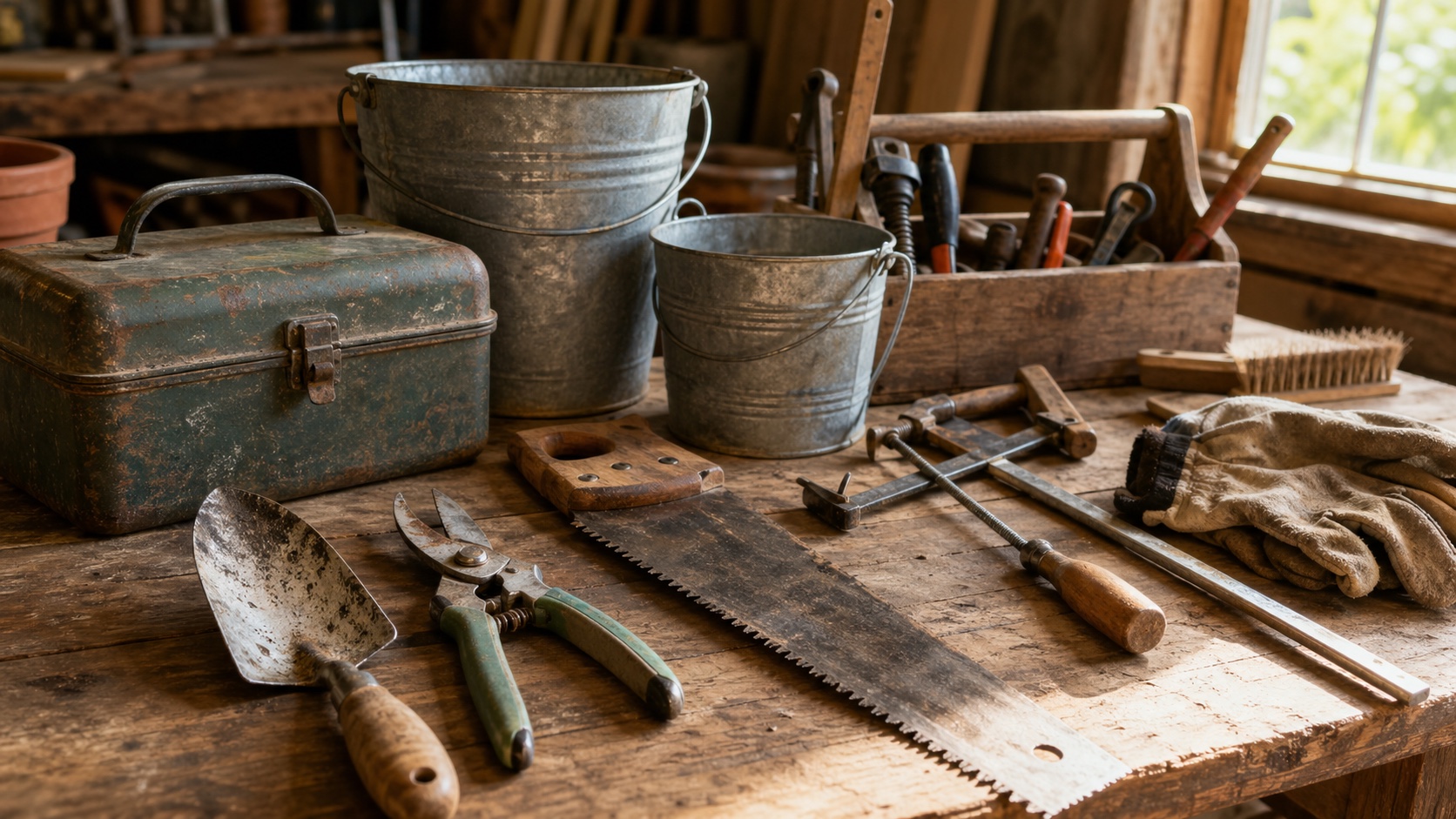
The best used homestead tools for beginners are simple, durable, easy to inspect, and useful this month. Start with hand tools, wheelbarrows, carts, buckets, shelving, clamps, basic saws, and storage. Be much slower with electrical gear, tanks, sprayers, safety equipment, and anything that needs repair before the first use.
Used tools can be one of the cleanest ways to stretch a first-year homestead budget. They can also become a shed full of almost-useful bargains. The difference is not luck. It is whether you buy tools that solve repeated work and whether you know what to inspect before money changes hands.
The used-tool rule for beginners
A used tool has to pass four tests: need, condition, cleanup, and storage. Need means you have already done the job enough times to know the tool will be used. Condition means the weak points are visible and acceptable. Cleanup means the tool can be made safe around soil, food, animals, and your hands. Storage means it has a dry, obvious home instead of becoming another item in a pile.
That filter keeps the article from turning into a list of romantic old tools. A rusty shovel on a peg wall may look like homestead progress, but if the handle is cracked, the blade is loose, and you already own two shovels, it is clutter with a nice story.
Why used tools can backfire
The beginner mistake is buying potential instead of function. Potential sounds like, 'I could fix that.' Function sounds like, 'This will help me move compost this weekend.' When you are early in homesteading, function matters more because every unfinished repair competes with the garden, chickens, meals, work, family rhythm, and basic cleanup.
Safety is part of the filter too. OSHA's hand and power tool guidance is written for workplaces, but the practical principle belongs at home: tools become hazardous when they are poorly maintained, damaged, or used outside their limits. The CPSC also regularly warns consumers about unsafe cords, chargers, power strips, and recalled electrical products. That is why this guide favors simple hand tools and treats unknown electrical gear with caution.
1. Shovels, rakes, and hoes
Long-handled garden tools are usually the easiest used-tool win. Shovels, digging forks, hard rakes, leaf rakes, hoes, and cultivators are simple enough to inspect in a driveway. You are looking for a solid handle, a tight head, a straight shaft, and metal that is worn but not collapsing.
Do not reject every old tool because it has surface rust or a rough handle. A little cleaning, sanding, and oiling may be reasonable. Do reject tools with cracked handles, loose heads, deep bends, broken tines, soft wood near the socket, or a blade so thin and pitted that it flexes when it should hold firm.
2. Wheelbarrows and garden carts
A wheelbarrow or garden cart is worth watching for because moving soil, compost, mulch, feed, firewood, and debris gets old fast. Used is reasonable when the tray is solid, the handles are not split, the frame is not twisted, and the tire situation is clear.
The tire is where beginners underestimate the true price. A cheap used wheelbarrow with a flat tire may still be a good deal, but only if you know the replacement cost before buying. If the handles are rotten and the tray is cracked, the project is no longer a wheelbarrow. It is a parts hunt.
3. Buckets, tubs, and totes
Buckets and totes are unglamorous, which is exactly why they earn an early place. You use them for weeds, kindling, feed scoops, harvest overflow, tool staging, soaking, hauling, and cleanup. Used buckets, galvanized tubs, milk crates, and sturdy lidded totes can be good buys when they are cleanable and not brittle.
Be strict about unknown contents. Do not use mystery buckets for animal feed, harvested food, seed storage, fermenting, water, or anything that will touch the garden in a sensitive way. If you cannot identify what was stored in it, use it only for dry non-food jobs or leave it behind. Food-safe containers are one place where the cheaper item is not always the wiser item.
4. Shelving, toolboxes, and storage
Storage is a tool because it protects every other tool. Used shelving, peg rails, hooks, toolboxes, bins, and cabinets can make a small shed work better without spending new money on a dream workshop. The goal is not a perfect wall of gear. The goal is that sharp tools, gloves, seed trays, fasteners, and chicken supplies are not scattered across the house and garage.
Inspect storage pieces for water damage, wobble, missing shelves, bent rails, sharp rust, and whether they can be anchored if needed. A heavy cabinet that cannot sit level is not a deal. A simple used shelf that keeps the same five tools easy to find every week probably is.
5. Clamps, hand saws, and basic workshop tools
Clamps, hand saws, hammers, squares, levels, files, rasps, and simple wrenches are often good secondhand buys because they are easy to test. Open and close the clamp. Sight down the level or square. Check the saw plate for deep bends. Look for mushroomed hammer heads, loose handles, missing teeth, and file teeth that are worn smooth.
This category helps beginners because first-year homesteading involves more small fixing than most people expect: tightening a gate, building a temporary trellis, repairing a raised bed corner, cutting a stake, adjusting a latch, or building a simple shelf. You do not need a full shop before you need a few basic tools that actually work.
6. Pruners, loppers, and cutting tools
Pruners and loppers can be worth buying used, but they deserve a closer look than a shovel. The pivot should move smoothly, the blade should meet cleanly, the handles should not wobble, and replacement blades or springs should be available if the tool is a known style. A cheap pair that crushes stems instead of cutting them will make garden work harder and can damage plants.
Cleanliness matters here. University extension guidance commonly notes that dirty garden tools and containers can move plant disease from one plant to another. When buying used cutting tools, plan to scrub off debris and disinfect the blade before it touches your garden. If the tool is caked in sap, rusted at the pivot, or cannot be opened for cleaning, skip it.
7. Ladders and step stools, with caution
This is the most cautious item on the list. A sturdy step stool, low platform, or simple ladder can be useful for storage, pruning, repairs, and cleaning. It can also be one of the worst places to save money if you cannot verify its condition.
Only consider used ladders if you can inspect every rung, foot, hinge, lock, rail, label, and fastener. Avoid bent rails, missing feet, cracked fiberglass, damaged locks, homemade repairs, paint that hides the material, and anything that feels unstable. If you are uncertain, buy new. Falling off a questionable ladder is not a frugal homestead lesson.
What not to buy used first
Some items can be bought used by experienced people who know exactly what they are inspecting. That does not make them good beginner purchases. As a first-year rule, be very slow with used extension cords, battery chargers, power strips, chainsaws, pressure washers, pumps, sprayers, propane gear, fuel containers, respirators, hearing protection, eye protection, helmets, and anything connected to electricity, pressure, fuel, chemicals, or fall protection.
This is not fear-based advice. It is sequencing. A beginner can learn a lot from a used shovel. A beginner should not have to learn electrical safety from a questionable cord or pesticide safety from an unlabeled sprayer found at a yard sale.
Where to find used homestead tools
The best sources are usually ordinary and local: estate sales, farm auctions, neighborhood marketplaces, garage sales, reuse stores, tool libraries, family sheds, and friends who garden more than they currently have time for. Local matters because shipping can erase the savings on heavy tools, and because you want to put your hands on the item before buying.
A realistic first used-tool haul
A strong beginner haul is not dramatic. It might be one digging fork, one leaf rake, two clean buckets, a box of clamps, a sturdy shelf, and a wheelbarrow that only needs a clearly priced tire. That set does more for a working homestead than an impressive specialty tool you cannot maintain.
The budget target should be modest. If a basic new shovel is $25 to $40 locally, a used one at $10 to $15 can make sense if the handle and head are sound. If a used wheelbarrow is $45 but needs a $35 tire and new handles, compare that honestly against a basic new cart before calling it savings.
Cleaning and maintenance after you buy
Do not bring a used tool home and toss it straight into the shed. Clean off soil, remove plant debris, dry metal parts, oil wooden handles if needed, sharpen blades carefully, and disinfect cutting tools before garden use. For storage items, wipe down shelves and bins before they touch feed, seed, gloves, or harvest supplies.
A five-minute reset protects the purchase. It also teaches you whether the tool deserves a permanent place. If you resent cleaning it, cannot store it, or immediately discover the repair is bigger than expected, that is feedback for the next buying decision.
The useful next step
Write down the three jobs you repeated most in the last month. Maybe it was moving compost, hauling feed, clearing weeds, storing chicken supplies, or cutting stakes. Only shop for used tools that solve those jobs. That one boundary will save more money than chasing every cheap listing that looks homesteady.
Used tools are worth buying first when they make ordinary work easier this week. They are not worth buying when they create a new project, a new safety question, or a new storage problem. Start with boring, visible, useful tools. Let the fancier purchases wait until your routines prove they deserve the space.
Best Next Step
Use the buy-first guide before you add more gear.
The buy-first guide helps you separate useful purchases from the gear that only looks useful online.
Get the buy-first guideRecommended next reads
Read the next guide that supports this decision
These guides keep the tool conversation connected to budget, first-year priorities, and the jobs you actually repeat.
Tools
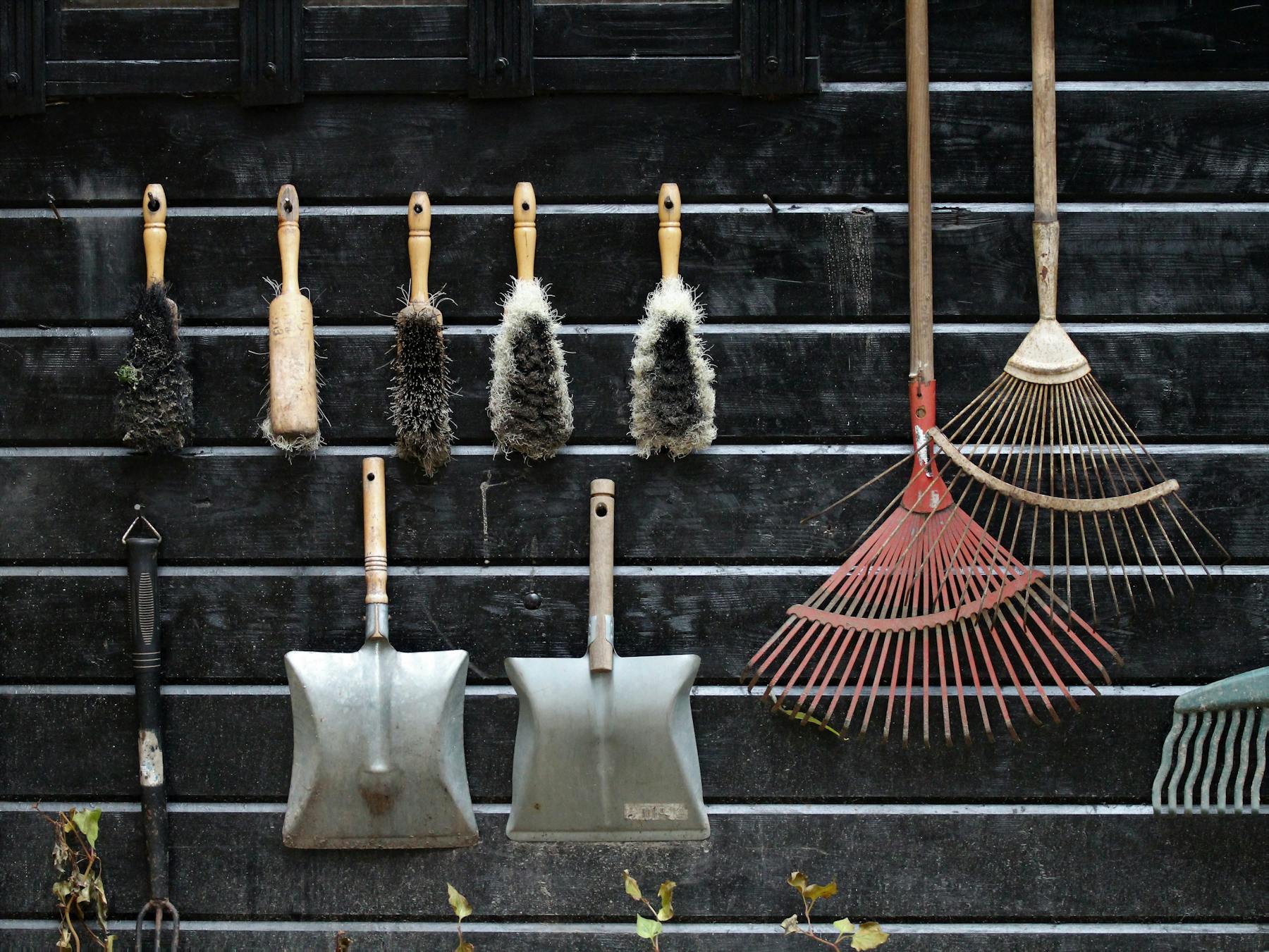
Tools I Actually Use on Our Homestead
A small list of genuinely useful tools beats a big fantasy shopping cart. These are the kinds of things that keep earning their place.
Budgeting
Homesteading on a Budget: What to Buy First and What Can Wait
If money is tight, the smartest homestead purchases are the ones that reduce friction quickly and keep you from rebuying the same lesson twice.

Tools
Best Beginner Work Gloves for Garden and Coop Work
A practical guide to choosing beginner work gloves for garden, coop, and yard work without overbuying or buying the wrong kind.
Frequently asked questions
What homestead tools are best to buy used first?
Start with simple, durable, easy-to-inspect tools: shovels, rakes, hoes, wheelbarrows, garden carts, buckets, totes, shelving, clamps, hand saws, and basic workshop storage. These usually reveal their condition quickly and do not depend on hidden electronics.
What tools should beginners usually buy new instead?
Buy new when failure could create a serious safety problem or when hidden wear is hard to judge. That usually includes respirators, eye protection, hearing protection, electrical cords, chargers, batteries, sprayers with unknown chemical history, and power tools you cannot test thoroughly.
How much should I pay for a used homestead tool?
A simple rule is to stay around half of the price of a solid new basic version unless the used item is unusually clean, repair parts are easy to find, and you know you will use it immediately. If repairs push the total near new-tool pricing, skip it.
Is rust a dealbreaker on used garden tools?
Light surface rust is often manageable on shovels, hoes, saws, and buckets. Deep pitting, cracked metal, loose heads, rotten handles, bent frames, or rust inside tanks and sprayers should make you walk away.
Recommendations
Useful tools and resources for this decision
These are included only where they reduce repeated friction, clarify a next step, or help you avoid buying the wrong thing first.
Beginner-friendly
Harris Farms galvanized hanging poultry feeder, 30 lb
A straightforward metal feeder for a modest flock when you want capacity without a complicated mechanism.
Check current priceWorth the money
Farm Tuff top-fill poultry fountain, 5 gallon
A larger gravity-fed waterer for people who want fewer refills without adding an elaborate watering system.
Check current pricePortable fencing
Useful when you are still experimenting with layout, movement, and protection.
Worth waiting on until you know your actual pattern.
Check current priceRecommended next reads
Read next if it helps the decision
Move into the next guide only if it clarifies the next practical step.
Tools
Tools I Actually Use on Our Homestead
A small list of genuinely useful tools beats a big fantasy shopping cart. These are the kinds of things that keep earning their place.
Budgeting
Homesteading on a Budget: What to Buy First and What Can Wait
If money is tight, the smartest homestead purchases are the ones that reduce friction quickly and keep you from rebuying the same lesson twice.
Tools
Best Beginner Work Gloves for Garden and Coop Work
A practical guide to choosing beginner work gloves for garden, coop, and yard work without overbuying or buying the wrong kind.
Buy-first support
Get the buy-first guide before you add another tool.
Use the buy-first guide to decide what earns money now, what can be borrowed, and what belongs on the wait list.
Best for: Beginners who keep seeing useful things online and need a disciplined way to decide what actually earns a place.
- A buy now, borrow, wait, or skip framework
- Starter category shortlists
- A three-question purchase test
Practical tool notes, restrained gear decisions, and one disciplined guide first.
After signup, the download will unlock right here so you can save or print it.
About the author
William Mock
Founder, writer, and beginner homesteader
William writes from the beginner side of rebuilding after a layoff: homestead plans, family systems, budgets, tools, and the decisions that make a home feel less fragile.
Read why this site existsRelated Guides
Keep building context
Tools
Tools I Actually Use on Our Homestead
A small list of genuinely useful tools beats a big fantasy shopping cart. These are the kinds of things that keep earning their place.
Budgeting
Homesteading on a Budget: What to Buy First and What Can Wait
If money is tight, the smartest homestead purchases are the ones that reduce friction quickly and keep you from rebuying the same lesson twice.

Gardening
How to Plan Your First Homestead Garden Without Doing Too Much
A successful first garden is smaller, clearer, and less romantic than many beginners expect. That is a good thing.