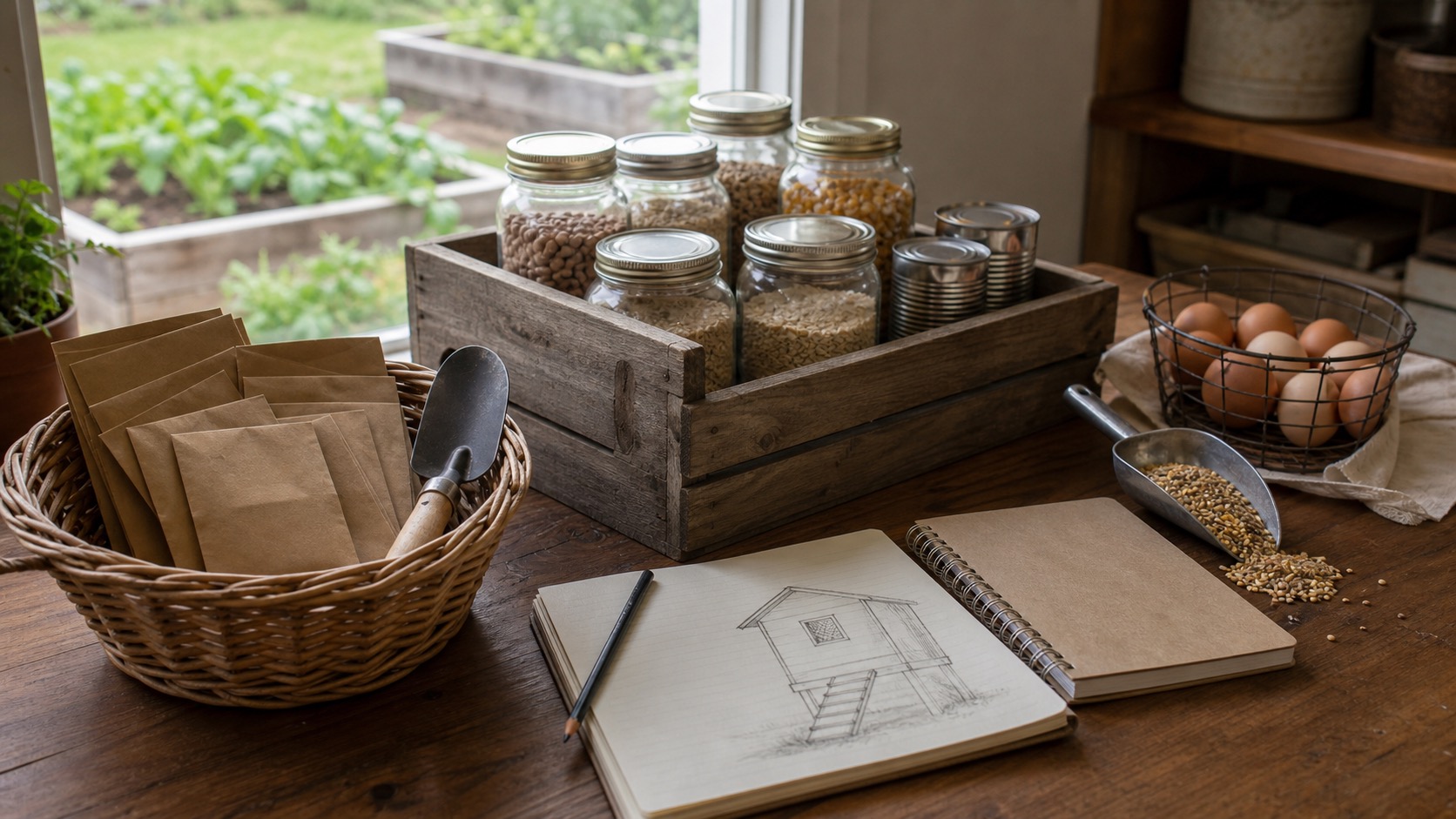
Start with the food system that fits your constraints now. A small rotating pantry is usually cheapest and fastest. A modest garden teaches food production with seasonal limits. Chickens can be wonderful, but they require daily animal care, local-rule checks, housing, feed, predator protection, and a steadier routine. The best first system is the one you can still maintain when the excitement wears off.
Food security sounds like one idea, but it can mean storing food, growing food, or caring for animals. Those systems require different money, time, space, and attention. Choosing the wrong first one can make homesteading feel heavier than it needs to.
Sequence matters more than intensity. The first version should teach skills, reveal constraints, and protect household stability while the bigger plan gets clearer. I would rather see a family rotate ten ordinary pantry meals well than buy three half-started food systems and feel behind by June.
The real decision underneath this topic
The real decision is not which food system sounds most like homesteading. The real decision is which system will make your household less fragile without creating a daily burden you are not ready to carry.
A stronger first move is to name the constraint before choosing the solution. Is the bottleneck cash, time, space, safety, storage, weather, family capacity, or lack of skill? Each answer points to a different next step.
A realistic beginner scenario
Imagine the week is already full: work or job search, meals, laundry, school or family needs, weather changes, and one project that keeps asking for attention. That is the week this advice has to survive.
If the plan only works when the calendar is open and everyone has energy, it is too fragile. The useful version is smaller, more visible, and easier to repeat. That is why pantry work often wins first. It touches meals you already make instead of asking the household to absorb a whole new lifestyle at once.
What I would do first
The important part is not making the first version impressive. The important part is closing the loop. A closed loop teaches you what the next version should be. An open loop mostly creates guilt, clutter, and another decision to carry.
What can probably wait
Most beginners can delay chickens before housing and feed budget, large gardens before watering rhythm, bulk pantry buying without rotation, and trying all three systems in the same first month. Delaying these does not mean giving up on them. It means refusing to spend future energy before the present system has proven it can hold.
Waiting is especially useful when a purchase or project depends on assumptions you have not tested yet. A month of observation can prevent a year of working around the wrong setup.
How to tell if the plan is working
A good beginner plan leaves evidence. You should be able to see whether the work got easier, whether money stopped leaking, whether the household felt calmer, and whether the next decision became clearer.
The clearest signal is repetition. If the routine, tool, crop, budget, or setup still makes sense during a busy week, it probably belongs. If it only works when you are unusually motivated, it needs to be smaller or better placed.
For pantry and freezer decisions, I keep the standard boring advice close: date what you store, rotate what you buy, keep cold food cold, and do not treat home canning like a creative recipe project. Tested food-preservation guidance matters because the mistake is not always visible.
The useful next step
The best first food system is the one you will still be maintaining when the excitement wears off.
If you want to turn this into action, write the smallest version on paper today: the cost ceiling, the time window, the materials already on hand, and the first moment in the week when the work will happen. That simple written boundary is often what separates a real homestead step from another idea floating around in your head.
I am including a few affiliate links because small, plain tools can make the first food system easier to maintain. They are not a shopping list. If you already have labels, containers, a notebook, or usable pots, start there and let the system prove what is missing.
Recommendations
Useful tools for the first small food system
Pantry first
Pantry labels and marker
Best if pantry rotation is your first move. Use them for dates, contents, and first-in, first-out shelves. Skip decorative systems until the meals are proven.
Check current priceGarden test
Grow bags or a small container setup
Useful for one herb, greens, or a small crop test before building permanent beds. Wait if you already have a usable bed or container.
Check current priceProtect food
Freezer thermometer
Worth considering if freezer meals, sale meat, garden overflow, or extra eggs are part of your first margin-building system.
Check current priceThe sequence test
Most homestead frustration is a sequencing problem disguised as a motivation problem. People are often willing to work; they are just working on too many unsupported systems at once. The first question should be: what has to be true before this project becomes useful? Water, storage, cash, time, skills, local rules, family agreement, and maintenance all count.
A good sequence makes the next action smaller and the next decision clearer. A bad sequence creates dependencies: buy this before that, build this before using that, learn this before fixing that. If one project creates five unfinished prerequisites, it probably belongs later.
A final sequence reality check
Before taking the next homestead step, ask whether this action closes a loop or opens three more. Closing loops builds confidence: a usable bed, a repeated meal rhythm, a clean storage area, a finished repair, a documented budget. Opening loops can be necessary, but too many at once makes the whole fresh start feel unstable. The first year should create more finished evidence than unfinished ambition.
Best Next Step
Turn this into one calmer next move.
The first-step checklist helps you narrow this idea into one useful next action instead of ten parallel projects.
Start with the first-step checklistRecommended next reads
Read the next guide that supports this decision
These are the next pieces most likely to help the bigger picture make more sense without sending you in ten directions at once.
Homesteading
Beginner Homesteading: Where to Start When You Feel Overwhelmed
If homesteading feels meaningful but overwhelming, start with a simpler order of operations instead of trying to do everything at once.
Chickens
The Real Cost of Getting Started With Backyard Chickens
Backyard chickens can be a strong first step into homesteading, but the startup costs and recurring work deserve an honest look.
Gardening
How to Plan Your First Homestead Garden Without Doing Too Much
A successful first garden is smaller, clearer, and less romantic than many beginners expect. That is a good thing.
Frequently asked questions
What is the best first food system for a beginner homesteader?
For most beginners, a small rotating pantry is the lowest-risk first food system because it works in almost any home and improves meals immediately. A garden or chickens can come first if you already have the space, time, budget, and daily routine to maintain them.
Should I start with chickens before a garden?
Only if animal care already fits your budget, local rules, housing plan, predator protection, and daily schedule. Chickens are rewarding, but they are less forgiving than a pantry shelf or one small garden bed.
What should wait until the first food system is working?
Large gardens, bulk pantry buys, preservation gear, extra chicks, and specialty tools should usually wait until one small system has made it through a normal month or season.
Recommendations
Useful tools and resources for this decision
These are included only where they reduce repeated friction, clarify a next step, or help you avoid buying the wrong thing first.
Pantry first
Pantry labels and marker
Use plain labels for dates, contents, and rotation. Skip decorative systems until your household proves what it actually eats.
Best for: Beginners starting with a small rotating pantry
Check current priceGarden test
Grow bags or a small container setup
Useful for a one-crop garden test before building permanent beds. Wait if you already have a usable bed or containers on hand.
Best for: Renters, small yards, patios, and first-season herb or greens experiments
Check current priceProtect food
Freezer thermometer
A small thermometer earns its place if freezer meals, sale meat, garden overflow, or extra eggs are part of your first system.
Best for: Households using freezer space as food-security margin
Check current priceRecommended next reads
Read next if it helps the decision
Move into the next guide only if it clarifies the next practical step.
Homesteading
Beginner Homesteading: Where to Start When You Feel Overwhelmed
If homesteading feels meaningful but overwhelming, start with a simpler order of operations instead of trying to do everything at once.
Chickens
The Real Cost of Getting Started With Backyard Chickens
Backyard chickens can be a strong first step into homesteading, but the startup costs and recurring work deserve an honest look.
Gardening
How to Plan Your First Homestead Garden Without Doing Too Much
A successful first garden is smaller, clearer, and less romantic than many beginners expect. That is a good thing.
First-Step Support
Get the first-step checklist before the bigger idea turns into too many projects.
A practical worksheet for choosing one system, setting a first-stage budget, and narrowing the next move while the picture is still forming.
Best for: Beginners who need a first-season plan with limits, not more tabs or more gear.
- A first-season decision checklist
- A one-system starter plan
- A buy-now versus wait-later filter
Beginner-friendly notes, useful guides, and the checklist first.
After signup, the download will unlock right here so you can save or print it.
About the author
William Mock
Founder, writer, and beginner homesteader
William writes from the beginner side of rebuilding after a layoff: homestead plans, family systems, budgets, tools, and the decisions that make a home feel less fragile.
Read why this site existsRelated Guides
Keep building context
Homesteading
Beginner Homesteading: Where to Start When You Feel Overwhelmed
If homesteading feels meaningful but overwhelming, start with a simpler order of operations instead of trying to do everything at once.
Chickens
The Real Cost of Getting Started With Backyard Chickens
Backyard chickens can be a strong first step into homesteading, but the startup costs and recurring work deserve an honest look.
Gardening
How to Plan Your First Homestead Garden Without Doing Too Much
A successful first garden is smaller, clearer, and less romantic than many beginners expect. That is a good thing.