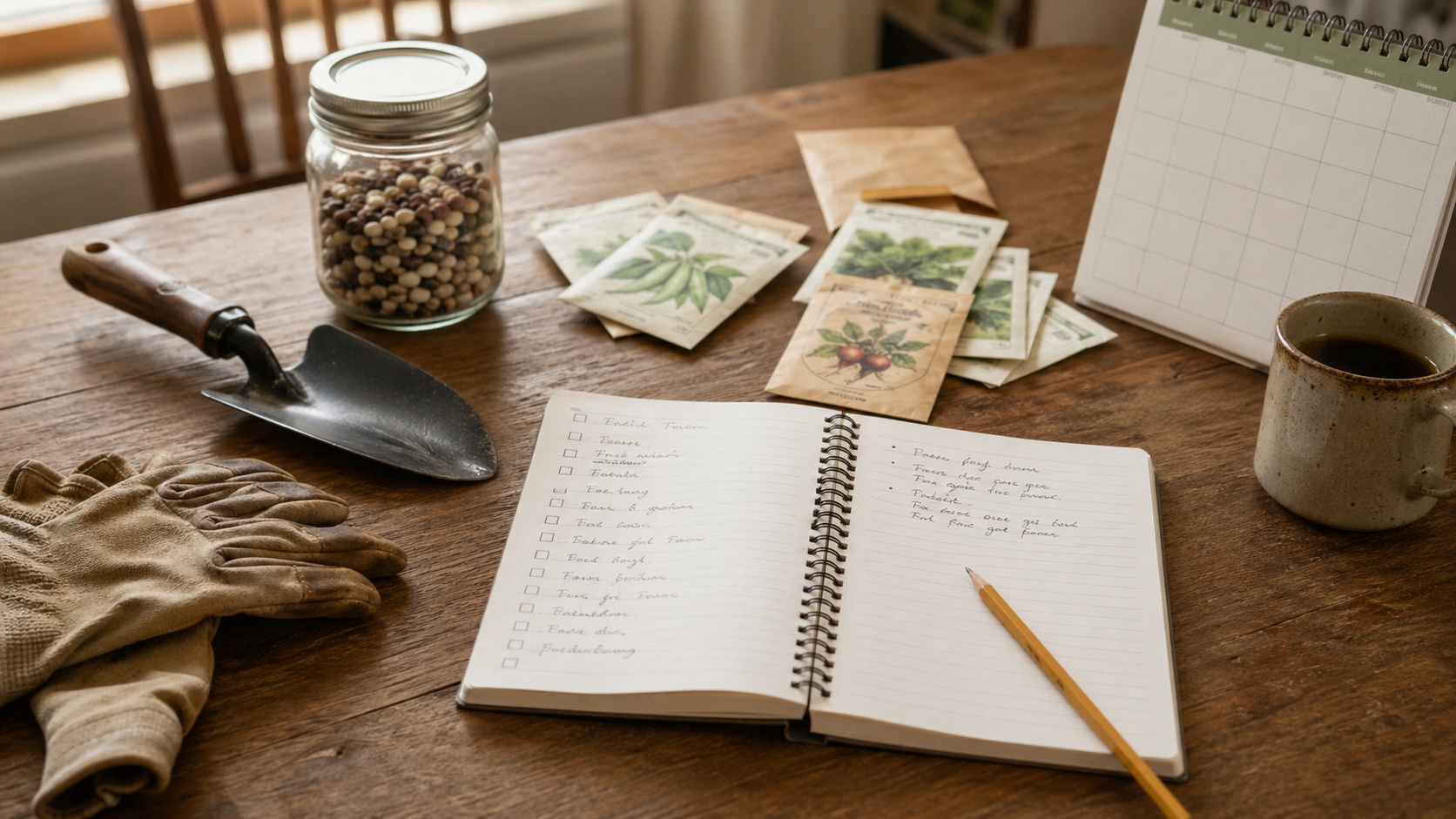
Choose your first homestead skill by looking at the problem that repeats most in your current life. If meals feel chaotic, start with pantry cooking and meal rhythm. If food scraps pile up, start composting. If the garden feels intimidating, start with seed starting or one small bed. If animals are the dream, start by learning local rules, daily chores, and setup costs before bringing anything home.
The first homestead skill should not prove that you are serious. It should make ordinary life a little steadier. That distinction matters because beginners often choose the skill that looks most like homesteading online instead of the skill that will actually get practiced on a Tuesday night when everyone is tired.
Why everything feels important
Homesteading attracts people because it connects so many good things: food, home, useful work, family rhythm, land, animals, tools, health, thrift, and independence. The hard part is that meaningful does not always mean first.
Bread baking, seed starting, chicken keeping, sewing, canning, composting, carpentry, fencing, herbal learning, budgeting, and pantry stocking can all be useful. But if you try to begin with all of them, the first season becomes a pile of half-open loops. A better first season creates evidence: one useful rhythm, one repeated skill, one clearer next decision.
The four-question filter
Use this filter before you buy supplies, start a project, or announce a big new plan. It turns a vague desire to become more self-reliant into a specific first practice.
The answer may be surprisingly plain. If grocery spending is the pressure, your first skill may be planning three simple pantry meals. If the yard feels wasteful, it may be composting leaves and kitchen scraps. If the family wants chickens, it may be calculating coop space, feed costs, and daily chores before choosing breeds.
Compare common first homestead skills
Start where life already hurts
A good first skill has a job waiting for it. That is why pantry cooking may be more valuable than sourdough, and tool storage may be more valuable than building a coop. The skill that reduces current friction will be practiced more often because life keeps reminding you why it matters.
Imagine a household that wants a bigger garden, laying hens, a stocked pantry, homemade bread, and a calmer weekly rhythm. The most useful first skill depends on the bottleneck. If the family is already overwhelmed by weeknight meals, chickens will add work before the food rhythm is stable. If the grocery budget is leaking, a pantry meal habit may free more money for later garden supplies. If the yard is full of leaves and food scraps, composting can turn waste into a future garden input without requiring a large new system.
The 30-day skill test
Before calling something your new homestead direction, test it for one month. The goal is not mastery. The goal is evidence. Can this skill fit normal weeks? Does it reduce pressure? Does it reveal the next useful step? Does it make you calmer or only busier?
For pantry meals, the smallest useful version might be three repeatable dinners from ingredients you already keep. For composting, it might be one lidded kitchen container and one outdoor pile or bin. For seed starting, it might be one tray of crops that match your planting calendar. For chicken research, it might be a written first-flock budget and a local-rule check before any shopping.
Skills that look simple but compound
Some beginner skills feel too small because they do not create instant transformation. Those are often the skills that compound. Meal planning teaches storage, shopping, cooking, waste reduction, and budget awareness. Composting teaches observation, moisture, carbon, nitrogen, patience, and garden inputs. Tool care teaches maintenance, safety, storage, and restraint before buying more gear.
The compounding skill is usually better than the flashy one because it supports several future systems. A weekly pantry rhythm supports gardening because you know what you actually cook. Compost supports gardening because it turns local waste into soil improvement. Tool care supports building because the basic gear is ready when a repair appears.
What should wait
Delay skills that require a future property, more daily capacity than you have, animals you are not ready to care for, equipment that would strain the budget, or safety rules you have not studied. Waiting is not a lack of commitment. It is how you keep the first year from becoming expensive and brittle.
Food preservation is a good example. Freezing extra soup or learning refrigerator pickles can be approachable. Shelf-stable canning is different. The National Center for Home Food Preservation and university extension programs emphasize using tested recipes and reliable processing guidance because unsafe canning methods can cause serious foodborne illness. That does not mean canning is off-limits. It means it should be learned carefully, not improvised as a first-week project.
How to score your options
If everything still feels equal, score each skill from one to five in five areas: usefulness this month, repeatability, startup cost, safety complexity, and family fit. A high score means the skill is useful now, easy to repeat, affordable, low-risk, and supported by the people who share the household.
Example beginner paths
If your main pressure is food cost, start with one pantry meal rhythm, then learn small-batch freezing, then plant the crops your family already eats. If your main pressure is land readiness, start with observation and basic tool care, then compost, then one small garden bed. If your main pressure is wanting animals, start with chicken research, local rules, coop planning, and a chore schedule before anything living comes home.
These paths are not rules. They are examples of sequencing. Each one starts with something repeatable and uses the result to make the next decision less emotional.
The useful next step
Write down three weekly pressures: meals, money, clutter, waste, yard maintenance, garden uncertainty, animal planning, repairs, or family rhythm. Circle the one that repeats most loudly. Then choose the smallest skill that could reduce it within 30 days.
That may feel less exciting than choosing a full homestead project, but it is how a real fresh start gets traction. One repeated skill gives you feedback. Feedback creates better decisions. Better decisions build a homestead that fits your real life instead of the imaginary version that only works when everything is calm.
Best Next Step
Turn this into one calmer next move.
The Start Here page helps you narrow the big homestead idea into a practical first path for your current season.
Start with the calmer beginner pathRecommended next reads
Read the next guide that supports this decision
These guides help turn the first-skill decision into a cleaner first-year sequence.
Homesteading
Beginner Homesteading: Where to Start When You Feel Overwhelmed
If homesteading feels meaningful but overwhelming, start with a simpler order of operations instead of trying to do everything at once.
Homesteading
Our First-Year Homestead Priorities: What We’re Doing Now and Why
A first year goes better when priorities are chosen, not inherited. These are the systems and projects we are focusing on now and the reasons behind them.
Systems
How to Build a Calmer Weekly Homestead Rhythm
A workable weekly rhythm matters more than bursts of motivation. This is how to structure a steadier, lower-drama home system.
Frequently asked questions
What is the best first homestead skill to learn?
The best first skill is the one that solves a real recurring problem in your current life. For many beginners, that is meal planning from pantry basics, composting, seed starting, basic tool care, a weekly reset routine, or learning chicken setup requirements before buying birds.
Should I start with gardening, chickens, or food preservation?
Start with the system that fits your space, budget, and week right now. A small garden or compost habit is often easier to practice immediately. Chickens require recurring care, local-rule checks, and setup costs. Food preservation is valuable, but canning should wait until you are ready to follow tested recipes exactly.
How long should I practice one homestead skill before adding another?
Give the first skill at least four ordinary weeks. That is long enough to see whether it survives busy days, weather changes, budget pressure, and family routines.
What homestead skills should wait until later?
Delay skills that require land you do not have, animals you are not ready to care for daily, expensive equipment, food-safety precision you have not studied, or a level of storage and maintenance your household cannot support yet.
Recommendations
Useful tools and resources for this decision
These are included only where they reduce repeated friction, clarify a next step, or help you avoid buying the wrong thing first.
Useful first buy
Field notebook
A simple paper notebook for plans, costs, changed decisions, and recurring tasks.
Best for: Capturing plans, costs, and recurring checklists
Check current priceLearn first before buying
Homestead budget starter sheet
A simple spending framework for prioritizing purchases, borrowing first, and delaying nonessentials.
Read the guideLearn first before buying
Simple habit and planning workbook
A straightforward planning resource for routines, resets, and family rhythms when memory is carrying too much.
Check current priceRecommended next reads
Read next if it helps the decision
Move into the next guide only if it clarifies the next practical step.
Homesteading
Beginner Homesteading: Where to Start When You Feel Overwhelmed
If homesteading feels meaningful but overwhelming, start with a simpler order of operations instead of trying to do everything at once.
Homesteading
Our First-Year Homestead Priorities: What We’re Doing Now and Why
A first year goes better when priorities are chosen, not inherited. These are the systems and projects we are focusing on now and the reasons behind them.
Systems
How to Build a Calmer Weekly Homestead Rhythm
A workable weekly rhythm matters more than bursts of motivation. This is how to structure a steadier, lower-drama home system.
First-Step Support
Get the first-step checklist before the bigger idea turns into too many projects.
A practical worksheet for choosing one system, setting a first-stage budget, and narrowing the next move while the picture is still forming.
Best for: Beginners who need a first-season plan with limits, not more tabs or more gear.
- A first-season decision checklist
- A one-system starter plan
- A buy-now versus wait-later filter
Beginner-friendly notes, useful guides, and the checklist first.
After signup, the download will unlock right here so you can save or print it.
About the author
William Mock
Founder, writer, and beginner homesteader
William writes from the beginner side of rebuilding after a layoff: homestead plans, family systems, budgets, tools, and the decisions that make a home feel less fragile.
Read why this site existsRelated Guides
Keep building context
Homesteading
Beginner Homesteading: Where to Start When You Feel Overwhelmed
If homesteading feels meaningful but overwhelming, start with a simpler order of operations instead of trying to do everything at once.
Homesteading
What I Wish I Knew Before Trying to Build a Simpler Life
A simpler life is not built by adding the right aesthetic. It is built by subtracting noise, choosing better systems, and learning what really matters.
Homesteading
Our First-Year Homestead Priorities: What We’re Doing Now and Why
A first year goes better when priorities are chosen, not inherited. These are the systems and projects we are focusing on now and the reasons behind them.