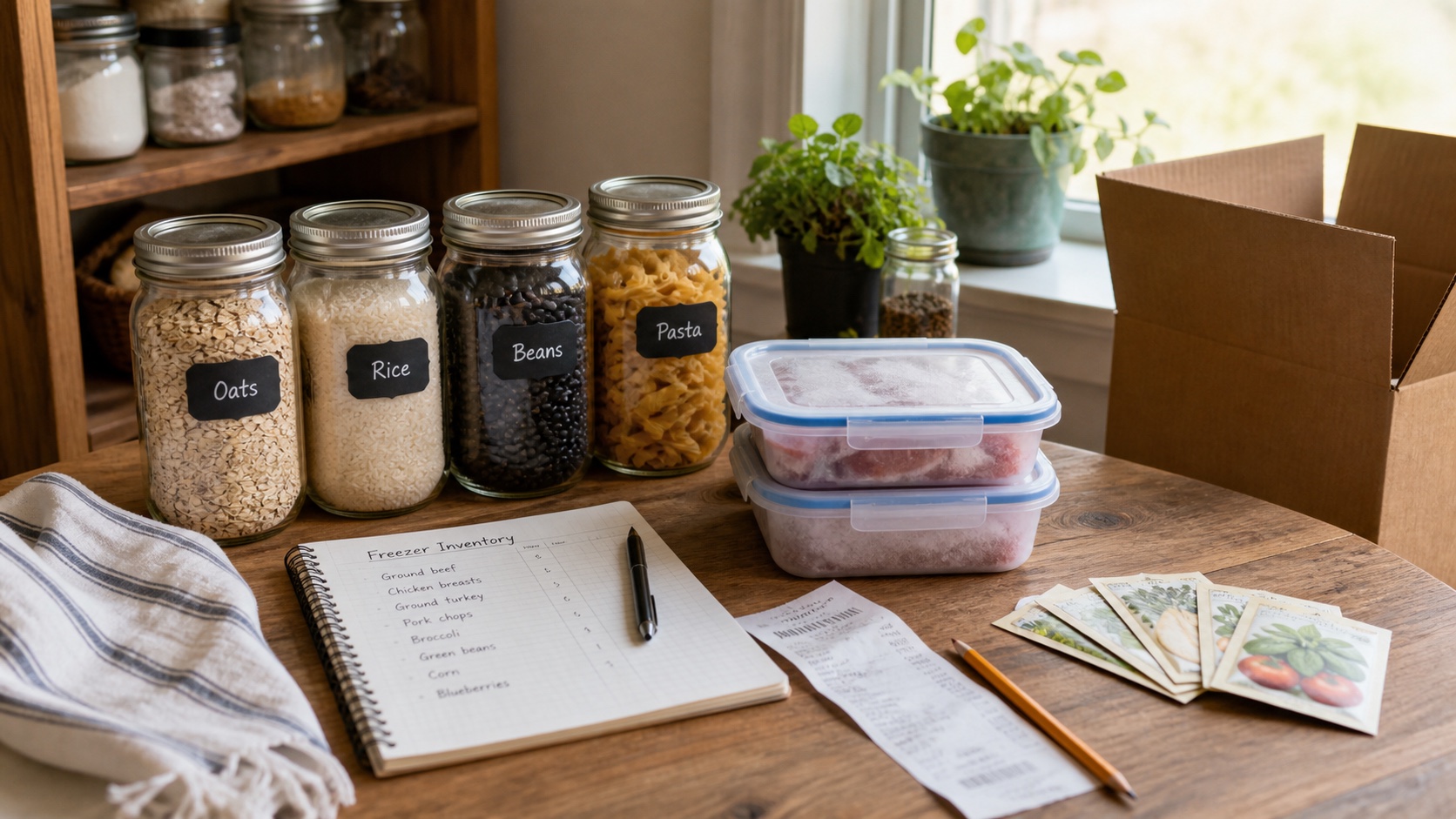
Start with the meals already feeding your household: a small rotating pantry, a visible freezer inventory, a few staple recipes, one container herb or green, and a weekly meal rhythm you can keep during a busy week. You do not need land to become less fragile around food.
Waiting for the move can quietly turn into waiting for life to begin. I understand the temptation because the future property feels like the place where the real work starts. But food security gives you practical work now: learn what your family eats, what stores well, what goes to waste, and what meals can happen when money or time is tight.
A fresh start after disruption has to respect both hope and shock. I do not want food security to become another dramatic identity project. Facts, cash, health, and family trust come before big pantry shelves, canning gear, or a freezer full of food nobody has a plan to use.
The real decision underneath this topic
The real decision is how to build food security before you have land, a final kitchen, a settled routine, or the storage space you imagine having later. That matters because it is easy to spend money, time, or emotional energy on a future version of life before the actual constraint is clear.
A stronger first move is to name the constraint before choosing the solution. Is the bottleneck cash, time, space, safety, storage, weather, family capacity, or lack of skill? Each answer points to a different next step.
A realistic beginner scenario
Imagine a week that already feels full: work or job search, meals, laundry, school or family needs, a grocery run that got more expensive than expected, and one project that keeps asking for attention. That is the week this advice has to survive.
If the plan only works when the calendar is open and everyone has energy, it is too fragile. The useful version is smaller, more visible, and easy enough that another adult in the house can understand it without reading your mind.
What I would do first
The important part is not making the first version impressive. The important part is closing the loop. A closed loop teaches you what the next version should be. An open loop mostly creates guilt, clutter, and another decision to carry.
For me, this is where food security starts to feel less theoretical. If the shelf has ingredients for real meals, the freezer has food that can be found, and the grocery list is based on what is actually missing, the household is less dependent on perfect weeks.
What can probably wait
Most beginners can delay bulk buying foods nobody likes, expensive preservation gear before a food rhythm exists, large emergency kits without normal meal integration, and assuming the future property will solve current habits. Delaying these does not mean giving up on them. It means refusing to spend future energy before the present system has proven it can hold.
Waiting is especially useful when a purchase or project depends on assumptions you have not tested yet. A month of observation can prevent a year of working around the wrong setup.
How to tell if the plan is working
A good beginner plan leaves evidence. You should be able to see whether the work got easier, whether money stopped leaking, whether the household felt calmer, and whether the next decision became clearer.
The clearest signal is repetition. If the routine, tool, crop, budget, or setup still makes sense during a busy week, it probably belongs. If it only works when you are unusually motivated, it needs to be smaller or better placed.
For storage and freezer decisions, I would keep FoodSafety.gov's FoodKeeper guidance close by. It is a better safety source than memory, especially when you are deciding what belongs in the pantry, refrigerator, or freezer and how quickly leftovers need to be used.
The useful next step
If you can cook calmly from what you have, you have already started building a more resilient homestead life.
If you want to turn this into action, write the smallest version on paper today: the meals you repeat, the ingredients already on hand, the food that keeps getting wasted, and the storage spot you can actually maintain. This article includes a few affiliate links because a small number of tools can protect food you already own. They are optional, and none of them matter if the meal rhythm is not clear yet.
Recommendations
Useful tools for a small food-security system
Protect the food
Freezer thermometer
Start here if the freezer is part of your plan. It helps you confirm the freezer is holding cold before you trust it with batch meals or sale meat.
Check current priceSmall-batch storage
Reusable freezer containers
Useful for small-batch freezing after you know which meals your household repeats. Buy a small set first.
Check current priceRotation helper
Pantry labels and marker
Plain labels are enough. Use them for dates, contents, and rotation instead of trying to build a curated pantry.
Check current priceThe stability-first filter
A fresh start after disruption has to protect stability while it creates room for change. That means the first move is rarely the dramatic one. It is usually paperwork, cash clarity, food planning, a simpler weekly rhythm, honest conversations, and a pause on purchases that are really attempts to feel in control.
The emotional truth still matters. A layoff, move, or forced reset can expose how fragile the old life felt. But emotion should inform the plan, not drive every decision. The strongest fresh-start choices are reversible at first, useful immediately, and respectful of the people who have to live with the change.
Best Next Step
Turn this into one calmer next move.
The first-step checklist helps you narrow this idea into one useful next action instead of ten parallel projects.
Take the beginner pathRecommended next reads
Read the next guide that supports this decision
These are the next pieces most likely to help the bigger picture make more sense without sending you in ten directions at once.
Homesteading
Beginner Homesteading: Where to Start When You Feel Overwhelmed
If homesteading feels meaningful but overwhelming, start with a simpler order of operations instead of trying to do everything at once.
Systems
How to Build a Calmer Weekly Homestead Rhythm
A workable weekly rhythm matters more than bursts of motivation. This is how to structure a steadier, lower-drama home system.
Homesteading
Our First-Year Homestead Priorities: What We’re Doing Now and Why
A first year goes better when priorities are chosen, not inherited. These are the systems and projects we are focusing on now and the reasons behind them.
Frequently asked questions
What is the best first food-security step before moving?
Start with the meals your household already eats. Build one extra round of shelf-stable ingredients for those meals, rotate them, and track what actually gets used.
Should I buy bulk food before I know where I am moving?
Usually no. A small rotating pantry is safer than a large stockpile of food your family may not eat, store well, or want to move later.
What food-security gear is worth buying first?
A freezer thermometer, clear freezer containers, and simple pantry labels can earn their place early because they protect food you already own and make rotation easier.
Recommendations
Useful tools and resources for this decision
These are included only where they reduce repeated friction, clarify a next step, or help you avoid buying the wrong thing first.
Protect the food
Freezer thermometer
A small thermometer helps you know whether the freezer is actually holding the safe cold zone before you trust it with sale meat, batch meals, or garden overflow.
Best for: Households using freezer meals, sale meat, or frozen garden food before a move
Check current priceSmall-batch storage
Reusable freezer containers
Useful for soups, cooked beans, rice portions, leftovers, and batch meals. Buy a small set first so you can learn what sizes your household actually uses.
Best for: Small-batch freezing and ordinary meal backup
Check current priceRotation helper
Pantry labels and marker
Plain labels are enough. The goal is not a matching pantry; it is dates, contents, and first-in, first-out rotation that another family member can understand.
Best for: Rotating jars, bins, freezer containers, and pantry shelves
Check current priceRecommended next reads
Read next if it helps the decision
Move into the next guide only if it clarifies the next practical step.
Homesteading
Beginner Homesteading: Where to Start When You Feel Overwhelmed
If homesteading feels meaningful but overwhelming, start with a simpler order of operations instead of trying to do everything at once.
Systems
How to Build a Calmer Weekly Homestead Rhythm
A workable weekly rhythm matters more than bursts of motivation. This is how to structure a steadier, lower-drama home system.
Homesteading
Our First-Year Homestead Priorities: What We’re Doing Now and Why
A first year goes better when priorities are chosen, not inherited. These are the systems and projects we are focusing on now and the reasons behind them.
Fresh start support
Get the first-step checklist that helps turn a reset into a real plan.
Use the checklist to pick one calmer next move, one budget frame, and one part of the bigger life rebuild to focus on first.
Best for: Beginners who need a first-season plan with limits, not more tabs or more gear.
- A first-season decision checklist
- A one-system starter plan
- A buy-now versus wait-later filter
Quiet notes for rebuilding, useful guides, and one real planning tool first.
After signup, the download will unlock right here so you can save or print it.
About the author
William Mock
Founder, writer, and beginner homesteader
William writes from the beginner side of rebuilding after a layoff: homestead plans, family systems, budgets, tools, and the decisions that make a home feel less fragile.
Read why this site existsRelated Guides
Keep building context
Fresh Start
Why I’m Starting a Homestead After Being Laid Off
A layoff changed more than work. It changed what security meant, and why a slower, more grounded life started to feel worth building.
Homesteading
Beginner Homesteading: Where to Start When You Feel Overwhelmed
If homesteading feels meaningful but overwhelming, start with a simpler order of operations instead of trying to do everything at once.
Homesteading
What I Wish I Knew Before Trying to Build a Simpler Life
A simpler life is not built by adding the right aesthetic. It is built by subtracting noise, choosing better systems, and learning what really matters.