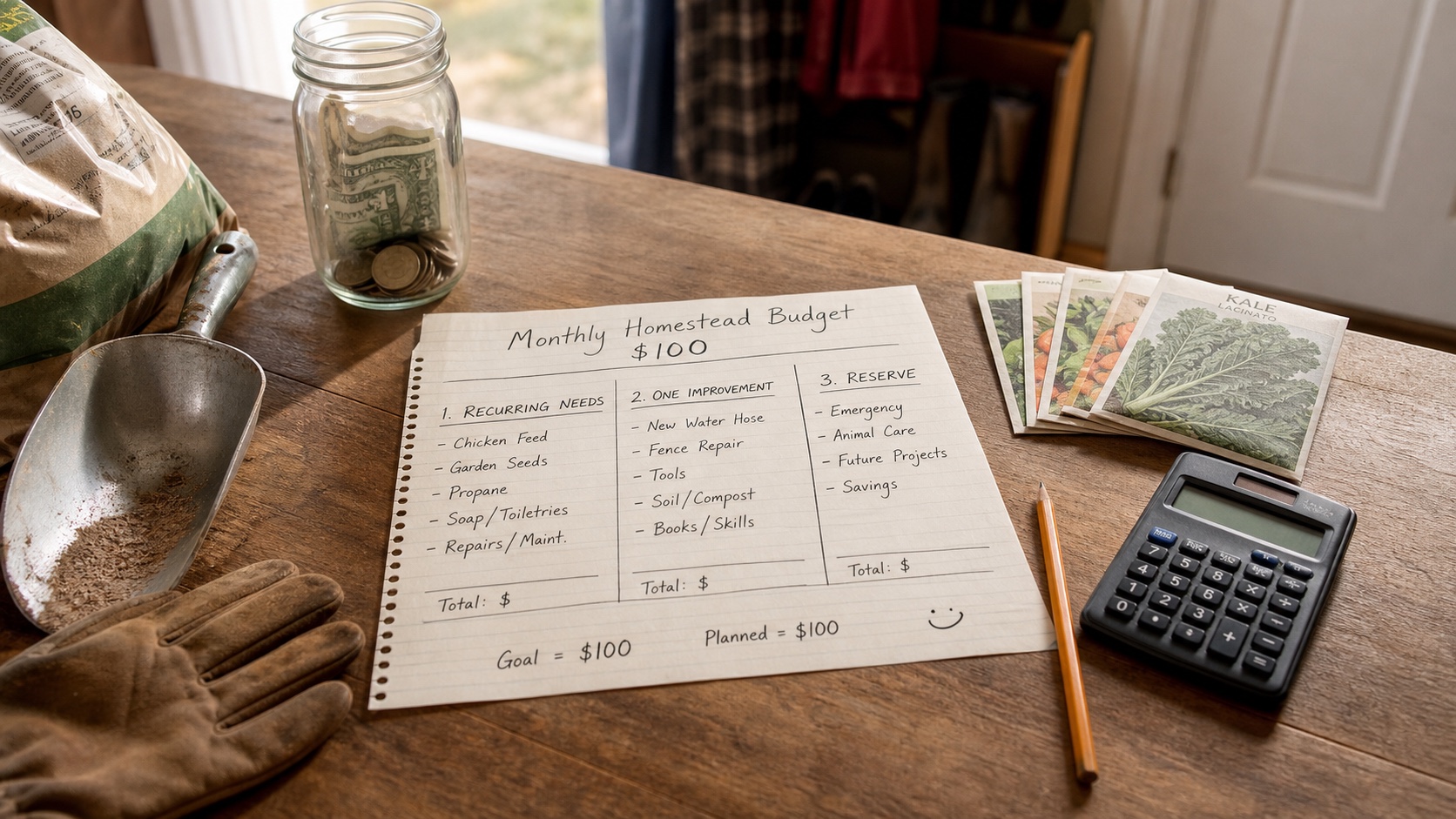
A $100 monthly homestead budget works best when it is treated like a repeatable system, not a tiny shopping spree. The simplest split is recurring needs first, one small improvement second, and a reserve last. If every dollar goes to exciting projects, the budget will fail the first time feed, bedding, soil, repairs, or household basics show up.
Small budgets are not the problem. Unassigned small budgets are. One feed-store stop, one bag of compost, one tool, and one impulse seed order can make the month disappear before the priority is funded.
The honest budget is the one that includes the unglamorous parts around the main idea: storage, maintenance, replacement, waste, mistakes, and recurring costs. A beginner budget does not need perfect forecasting, but it does need rules strong enough to survive an ordinary month.
The real decision underneath this topic
On paper, this guide is about a $100-a-month homestead budget. In practice, the decision is how to use a small monthly budget without making every homestead decision feel like deprivation. That matters because beginners often spend money, time, or emotional energy before the actual constraint is clear.
A stronger first move is to name the constraint before choosing the purchase. Is the bottleneck feed cost, bad storage, missing hand tools, weak soil, poor fencing, family time, or lack of confidence? Each answer points to a different use for the same $100.
A realistic beginner scenario
Imagine it is the first week of the month. There is $100 set aside, the feed bin is low, the garden bed needs compost, a gate latch is starting to fail, and a seed catalog is making everything look urgent. This is the week the budget has to survive.
If the plan only works when the calendar is open and everyone has energy, it is too fragile. The useful version is smaller, more visible, and easier to repeat: restock the active system, fix the problem that causes weekly friction, and leave a little margin untouched.
What I would do first
The important part is not making the first version impressive. The important part is closing the loop. A closed loop teaches you what the next version should be. An open loop mostly creates guilt, clutter, and another decision to carry.
What can probably wait
Most beginners can delay multi-category spending months, buying future equipment before current systems work, subscriptions and gadgets that do not solve a repeated problem, and projects that need three more purchases to become useful. Delaying these does not mean giving up on them. It means refusing to spend future energy before the present system has proven it can hold.
Waiting is especially useful when a purchase or project depends on assumptions you have not tested yet. A month of observation can prevent a year of working around the wrong setup.
How to tell if the plan is working
A good beginner plan leaves evidence. You should be able to see whether the work got easier, whether money stopped leaking, whether the household felt calmer, and whether the next decision became clearer.
The clearest signal is repetition. If the routine, tool, crop, budget, or setup still makes sense during a busy week, it probably belongs. If it only works when you are unusually motivated, it needs to be smaller or better placed.
The useful next step
A small budget can build real momentum if it stops trying to fund every identity at once.
If you want to turn this into action, write the smallest version on paper today: the cost ceiling, the time window, the materials already on hand, and the first moment in the week when the work will happen. That simple written boundary is often what separates a real homestead step from another idea floating around in your head. I am not adding product links here until a specific item earns the recommendation; a weak affiliate link would make the advice less trustworthy, not more useful.
The real-cost test
A homestead budget becomes useful when it includes the unglamorous costs around the main idea. A garden is not only seeds. Chickens are not only chicks. Tools are not only the purchase price. Every system carries setup, storage, maintenance, replacement, waste, and the cost of mistakes. Beginners do not need perfect forecasting, but they do need a budget that admits these categories exist.
The practical move is to divide spending into three buckets: recurring needs, one active improvement, and later. Recurring needs keep the system alive. The active improvement gets this month’s focus. Later protects you from buying supplies for a version of the homestead that is not real yet.
A final budget reality check
Before money moves, separate the useful purchase from the feeling the purchase is trying to create. Some homestead spending is really an attempt to feel secure, capable, or closer to the future. That is understandable, especially after disruption, but it can empty the budget fast. A stronger plan funds what keeps the active system working this month and writes the attractive-but-not-yet item on a waiting list.
If the numbers still feel tight after this pass, shrink the project before touching the household buffer; margin is part of the system, not leftover money.
Best Next Step
Put the numbers on paper before the next purchase.
The worksheet helps you decide what deserves money now, what can wait, and what should stay off the list completely.
Use the budget worksheetRecommended next reads
Read the next guide that supports this decision
These are the next pieces most likely to help the bigger picture make more sense without sending you in ten directions at once.
Budgeting
Homesteading on a Budget: What to Buy First and What Can Wait
If money is tight, the smartest homestead purchases are the ones that reduce friction quickly and keep you from rebuying the same lesson twice.
Tools
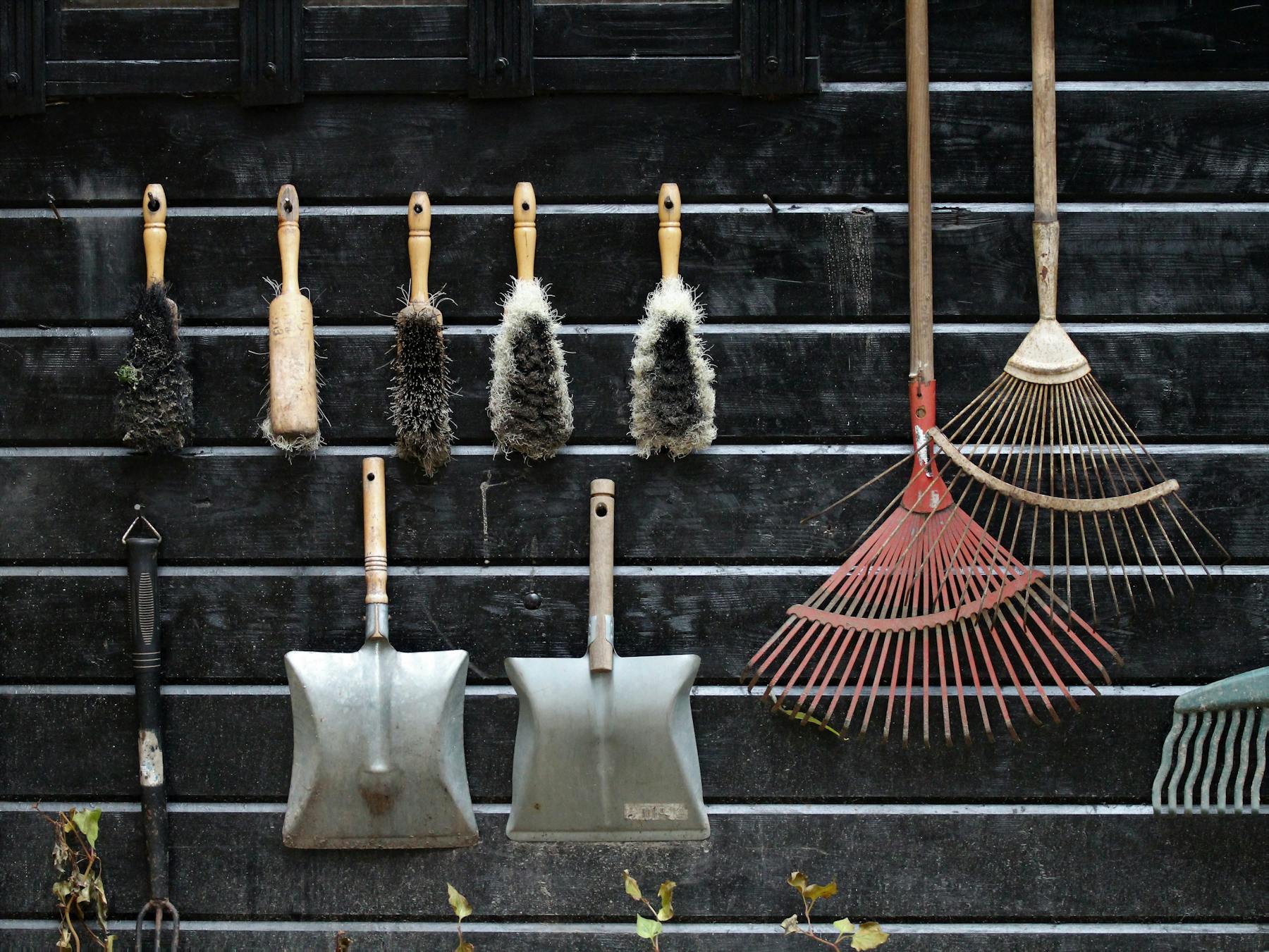
Tools I Actually Use on Our Homestead
A small list of genuinely useful tools beats a big fantasy shopping cart. These are the kinds of things that keep earning their place.

Gardening
How to Plan Your First Homestead Garden Without Doing Too Much
A successful first garden is smaller, clearer, and less romantic than many beginners expect. That is a good thing.
Frequently asked questions
What should the first budget decision be?
Set the spending boundary before comparing products. Then separate essentials, recurring costs, and upgrades that can wait until the system proves itself.
What mistake do beginners make most often here?
Most beginners either overbuild the first version or wait for a perfect future setup instead of starting with one clear, manageable step that teaches them something useful right now.
What should probably wait?
What should usually wait is anything decorative, highly specialized, or dependent on a bigger routine than you have already proven. Reliability first. Complexity later.
Recommendations
Useful tools and resources for this decision
These are included only where they reduce repeated friction, clarify a next step, or help you avoid buying the wrong thing first.
Useful first buy
Field notebook
A simple paper notebook for plans, costs, changed decisions, and recurring tasks.
Best for: Capturing plans, costs, and recurring checklists
Check current priceLearn first before buying
Homestead budget starter sheet
A simple spending framework for prioritizing purchases, borrowing first, and delaying nonessentials.
Read the guideLearn first before buying
Simple habit and planning workbook
A straightforward planning resource for routines, resets, and family rhythms when memory is carrying too much.
Check current priceRecommended next reads
Read next if it helps the decision
Move into the next guide only if it clarifies the next practical step.
Budgeting
Homesteading on a Budget: What to Buy First and What Can Wait
If money is tight, the smartest homestead purchases are the ones that reduce friction quickly and keep you from rebuying the same lesson twice.
Tools
Tools I Actually Use on Our Homestead
A small list of genuinely useful tools beats a big fantasy shopping cart. These are the kinds of things that keep earning their place.
Gardening
How to Plan Your First Homestead Garden Without Doing Too Much
A successful first garden is smaller, clearer, and less romantic than many beginners expect. That is a good thing.
Budget support
Get the budget worksheet before the next purchase.
Use the worksheet to sort purchases into buy now, borrow first, batch later, or skip for now while the first season is still taking shape.
Best for: Households trying to align purchases with this season's actual money, time, and attention.
- A spending-cap worksheet
- A buy, borrow, batch-later filter
- A quick review page for next-month decisions
Budget-first notes, honest tradeoffs, and the worksheet first.
After signup, the download will unlock right here so you can save or print it.
About the author
William Mock
Founder, writer, and beginner homesteader
William writes from the beginner side of rebuilding after a layoff: homestead plans, family systems, budgets, tools, and the decisions that make a home feel less fragile.
Read why this site existsRelated Guides
Keep building context
Budgeting
Homesteading on a Budget: What to Buy First and What Can Wait
If money is tight, the smartest homestead purchases are the ones that reduce friction quickly and keep you from rebuying the same lesson twice.
Tools
Tools I Actually Use on Our Homestead
A small list of genuinely useful tools beats a big fantasy shopping cart. These are the kinds of things that keep earning their place.
Chickens
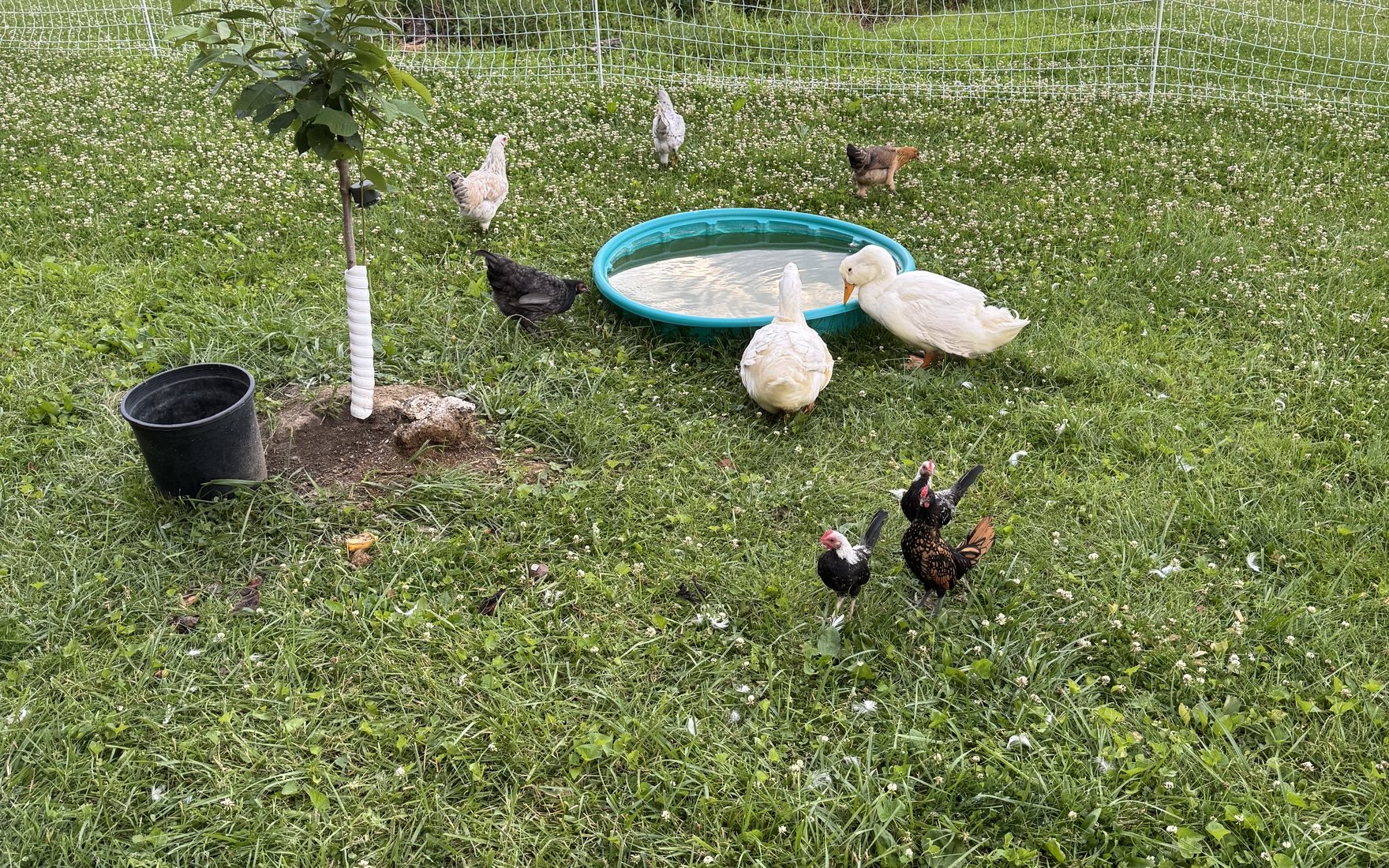
The Real Cost of Getting Started With Backyard Chickens
Backyard chickens can be a strong first step into homesteading, but the startup costs and recurring work deserve an honest look.